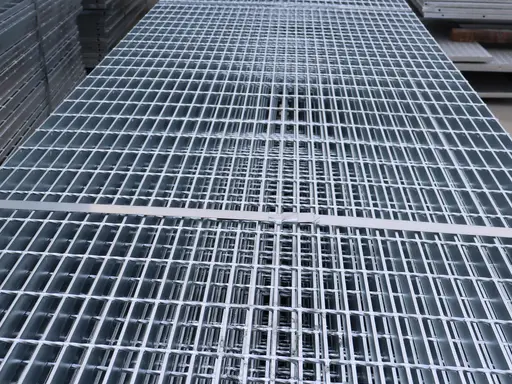
Vibrating or rattling grating in an industrial facility often sounds like a mere nuisance. However, you should never ignore this warning sign. Constant metallic chatter acts as an early indicator of mechanical fatigue. It often points to improper specification or failing anchorage underneath the walking surface. Persistent vibration rapidly accelerates structural degradation across your facility. Ignoring it risks serious OSHA compliance issues. Loose panels quickly become severe trip hazards. Furthermore, excessive noise levels can violate workplace acoustic standards.
This guide provides facility managers and structural engineers a clear diagnostic framework. We will help you identify the root causes of grating chatter. You will also learn a reliable decision matrix. It will guide you in retrofitting or replacing compromised infrastructure safely. By applying these engineered solutions, you can restore structural integrity and ensure long-term operational safety. Let us examine the true cost of neglected infrastructure and outline actionable steps to fix it permanently.
Key Takeaways
- Rattling is most commonly caused by a mismatch between the grating’s load-span capacity and the dynamic forces applied to it.
- Standard saddle clips frequently fail in high-vibration environments; specialized mechanical fasteners or welded connections are required.
- Sympathetic resonance from adjacent heavy machinery can amplify minor structural tolerances into severe rattling.
- Upgrading to properly specified Heavy-Duty Walkway Grating (e.g., thicker bearing bars, welded construction) permanently resolves load-induced deflection.
1. The Operational & Safety Risks of Ignored Grating Vibration
Ignoring a rattling walkway introduces severe risks to industrial operations. Metallic vibration creates constant micro-movements. These tiny shifts cause rapid bearing bar wear. Friction between the grating and the support beams fractures critical welds. Over time, this friction strips away protective coatings. Bare steel then faces accelerated corrosion at the exact points bearing the most weight. You compromise the entire structural integrity of the platform.
Safety hazards escalate quickly when you ignore these micro-movements. A minor rattle soon becomes a completely loose panel. Loose panels create immediate slip, trip, and fall hazards. OSHA heavily scrutinizes irregular walking surfaces. An unstable floor directly violates industrial safety compliance standards. Furthermore, constant rattling generates significant noise pollution. Facility acoustic compliance depends on controlling ambient noise. Continuous metallic clanking easily pushes a zone over permissible decibel limits. Workers suffer increased fatigue and impaired communication.
The business impact extends far beyond simple annoyance. Maintenance teams waste hundreds of hours replacing standard saddle clips. They retighten the same fasteners repeatedly. This reactive approach drains your maintenance budget. Instead, engineers must prioritize long-term stability. Specifying a proper Industrial Walkway Grating system from the start yields a massive return on investment. Upgrading eliminates chronic maintenance loops. Your facility gains safer floors, predictable maintenance schedules, and uninterrupted operational uptime.
![Industrial Walkway Grating Installation and Inspection]()
2. Diagnosing Deficient Load-to-Span Ratios (The Primary Cause)
A mismatch between load capacity and unsupported span causes most grating vibration. You must understand the crucial difference between dynamic and static loads. Static weight involves stationary objects resting on the surface. Dynamic impact involves movement. Heavy carts, vehicular traffic, or dropped loads introduce severe kinetic energy. This energy causes the grating to bend in the middle. We call this mid-span deflection. When the load passes, the metal snaps back. This rapid deflection and recovery cycle creates the signature rattling noise.
Proper diagnosis requires evaluating your panels against NAAMM guidelines. The National Association of Architectural Metal Manufacturers sets strict standards. You must measure your current bearing bar depth and thickness. Compare these measurements against the unsupported span length. If a span exceeds NAAMM recommendations for your specific load profile, the grating will always vibrate. Heavy-Duty Walkway Grating uses deeper, thicker bearing bars to span longer distances safely. Upgrading your panels bridges this gap and eliminates harmful deflection.
You can perform a simple field assessment called the "Bounce Test". Have a team member walk forcefully across the noisy section. Observe the center of the panel. If you see visible downward flex before the noise occurs, the panel lacks structural rigidity. You need thicker grating or shorter structural spans. If the panel remains rigid but still clatters against the steel, you have an anchorage failure.
NAAMM Span Alignment Assessment
| Observation | Likely Cause | Diagnostic Action |
| Panel bows under foot traffic | Deficient load-to-span ratio | Measure bearing bar depth; consult NAAMM span tables. |
| Panel shifts laterally | Incorrect installation clearances | Check edge gaps. Ensure maximum 1/4-inch tolerance. |
| Panel clatters but stays rigid | Anchorage failure | Inspect saddle clips and structural beam flanges. |
Best Practices for Load Diagnostics
- Always calculate for the maximum dynamic load, never the average static load.
- Measure spans from the inside edge of one support to the inside edge of the next.
- Document all vehicular traffic patterns crossing the specific walkway section.
3. Fastening and Anchorage Failures in Dynamic Environments
Standard saddle clips fail frequently in high-vibration zones. These traditional fasteners rely entirely on friction to hold the panel down. Heavy mechanical vibration slowly overcomes this friction. The retaining nuts back off the threaded studs. Once a single clip loosens, the panel gains leverage. It acts like a pry bar against the remaining clips. Soon, the entire grating section rattles loosely against the structural steel.
This looseness causes severe substructure wear. Loose grating acts like a grinding wheel against the supporting steel beams below. The hardened bearing bars slowly shave away the beam's flange. This grinding creates permanent dimensional gaps. Even if you install new clips later, the uneven beam surface prevents a tight fit. The rattle becomes a permanent structural defect. You must prevent this substructure wear at all costs.
Improper installation tolerances also generate lateral movement. Installers often leave too much space between adjacent grating panels. They might leave excessive gaps between the grating and structural walls. Missing or incorrect clearances allow the panel to slide side-to-side during dynamic loading. This lateral shift shears off standard fasteners.
Common Mistakes in Anchorage
- Using standard saddle clips in areas supporting forklift traffic.
- Over-tightening fasteners, which strips the threads and weakens the clamp.
- Ignoring worn structural beams before installing new grating panels.
To inspect your anchorage effectively, follow these steps:
- Isolate the noisy walkway section during active operational hours.
- Visually inspect all four corners of the offending panel for missing clips.
- Check the structural beam flange for shiny metal spots, indicating active friction.
- Measure the gap between panels to ensure it does not exceed 1/4 inch.
4. Transmitted Vibration (Sympathetic Resonance from Machinery)
Sometimes, the grating itself is not the source of the problem. Base-mounted pumps, industrial compressors, or heavy vehicular traffic generate massive kinetic energy. These machines transfer low-frequency vibrations directly into the primary steel structure. The steel frame acts as an acoustic and kinetic transfer pathway. The vibration travels freely until it reaches the walkway grating. The panels then rattle, acting as giant metal speakers amplifying the machinery's movement.
This kinetic transfer often leads to harmonic resonance. Every physical object has a natural frequency. When the operational frequency of the nearby machinery matches the natural frequency of the grating panel, harmonic resonance occurs. The minor vibration multiplies exponentially. The grating absorbs the energy and begins to bounce aggressively. This aggressive rattling can shear welded lugs and destroy heavy-duty fasteners in weeks.
You must break the kinetic pathway to stop transmitted vibration. Dampening solutions absorb the energy before it reaches the metal panel. Engineers highly recommend placing neoprene isolation pads between the grating and the support beam. Specialized structural dampening tape also works well for tighter tolerances. These elastomeric materials compress slightly under load. They absorb the low-frequency waves, completely decoupling the grating from the vibrating steel structure.
Identify common vibration transfer sources in your facility:
- Large reciprocating compressors mounted on shared structural skids.
- Stamping presses transferring kinetic shockwaves through the floor.
- Heavy industrial centrifuges operating at variable speeds.
- Fluid pumps causing pipe-hammer against shared steel supports.
5. Evaluation Framework: Specifying Heavy-Duty Walkway Grating to Eliminate Rattle
Eliminating vibration permanently requires selecting the right manufacturing construction. You must choose between welded and press-locked grating. Heavy-duty welded grating serves as the definitive choice for high-vibration applications. The manufacturing process fuses the cross bars directly into the bearing bars using extreme heat and pressure. This creates a single, unified piece of steel. Press-locked, swaged, or riveted grating can slowly deform under severe impact. Welded construction offers superior rigidity and resists the loosening forces of continuous vibration.
Material and finish selection plays a massive role in long-term stability. Rust destroys installation tolerances. As joints rust, the metal thins out. Thin metal creates gaps, and gaps create rattles. Specifying Galvanized Walkway Grating prevents this degradation. The hot-dip galvanizing process coats every joint in protective zinc. This finish locks in the structural dimensions. It prevents moisture from attacking connection points and keeps the grating tightly seated on its supports.
Upgrading your panels requires upgrading your anchorage. You must transition away from friction-based saddle clips. High-vibration environments demand heavy-duty welded lugs. Alternatively, you can use powder-actuated fasteners to shoot permanent studs directly into the structural steel. Mechanically locked grating systems offer another excellent solution. They utilize heavy clamping plates engineered specifically to resist lateral sheer and vertical uplift.
Use a structured decision matrix to determine your next steps. You must decide whether to repair the existing system or replace it entirely.
The Repair vs. Replace Decision Matrix
| Condition of Grating | Load Capacity Status | Recommended Action |
| Panels are straight; welds are intact. | Meets NAAMM standards for current load. | Repair: Install neoprene isolation pads and upgrade to heavy-duty mechanical fasteners. |
| Minor substructure wear detected. | Meets NAAMM standards for current load. | Repair: Apply dampening tape to beams; secure panels using powder-actuated anchors. |
| Bearing bars show visible bowing. | Under-specified for dynamic loads. | Replace: Mandate a full upgrade to Heavy-Duty Welded Grating. |
| Cross-bar welds are fractured. | Material fatigue evident. | Replace: Remove damaged panels immediately. Install thicker bearing bars. |
Conclusion
Fixing vibrating grating requires matching your structural load capacity to the actual operational reality of your facility. Rattling panels serve as a critical warning sign of mechanical fatigue. By diagnosing deflection issues and identifying sympathetic resonance, you can pinpoint the exact cause of the vibration. Upgrading to welded panels and utilizing heavy-duty mechanical anchorage prevents the problem from returning. You protect your substructure from wear and eliminate OSHA compliance risks.
Your next step involves conducting an immediate on-site structural audit. Measure your unsupported spans and evaluate the dynamic loads crossing them daily. Check your existing saddle clips for friction failures. Based on this audit, utilize the decision matrix to execute a targeted fastener retrofit. If the panels show signs of bowing or fractured welds, schedule a complete upgrade to thicker, engineered grating immediately.
FAQ
Q: Can I just weld loose grating panels directly to the support beams to stop the rattling?
A: While welding panels directly to the beams stops vibration, it permanently prevents maintenance access to piping and infrastructure below. Facility managers should avoid direct welding unless absolutely necessary. We strongly suggest using heavy-duty mechanical anchors. They provide permanent clamping force while allowing you to remove the panels for future infrastructure maintenance.
Q: How often should industrial walkway grating fasteners be inspected?
A: You should conduct standard visual inspections bi-annually. However, you must emphasize quarterly inspections for high-vibration zones located near heavy machinery or forklift traffic. Frequent checks catch loosening mechanical fasteners before they cause substructure damage or create hazardous trip conditions.
Q: Does hot-dip galvanizing affect how the grating fits or rattles?
A: Galvanizing adds a minimal, uniform layer of thickness. It does not cause rattling if installers specify the correct installation clearances initially. In fact, the zinc coating actively prevents structural thinning caused by rust. Rust degrades bearing bars and creates the gaps that eventually lead to severe rattling.
Q: What is the difference between standard and heavy-duty grating?
A: The primary difference lies in quantifiable material thickness. Heavy-duty grating utilizes bearing bars typically 1/4" to 3/8" thick or greater. Manufacturers engineer its robust cross-bar construction specifically to support forklift traffic and heavy rolling dynamic loads. Standard grating primarily supports lighter, pedestrian-only foot traffic.