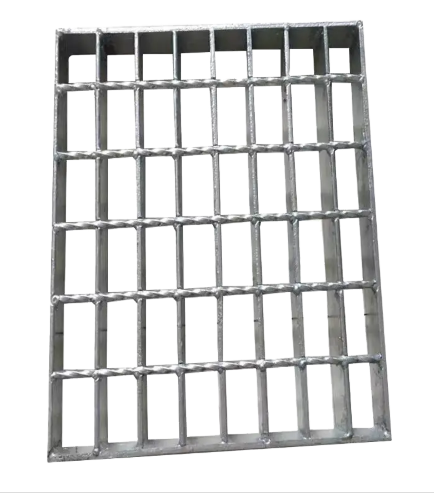
Walkway grating is the silent backbone of industrial safety, yet it often receives less engineering attention than the primary structures it supports. This oversight can be costly. Selecting the wrong grating specification leads to premature structural failure, immediate compliance violations under OSHA regulations, and inflated long-term maintenance budgets. Whether you are designing a petrochemical catwalk, a warehouse mezzanine, or a rooftop access path, the grating must perform two non-negotiable functions: supporting the load and preventing slips.
This guide serves as a technical resource for facility managers and engineers moving from general concepts to precise specification. We move beyond basic definitions to provide a comparative decision framework for materials, surface profiles, and structural designs. By understanding the interaction between environmental exposure and load requirements, you can select Walkway Grating that balances upfront CapEx with long-term operational safety.

Key Takeaways
Material Hierarchy: Carbon steel for maximum load; Aluminum for weight reduction; FRP for chemical/electrical resistance.
Safety Compliance: Meeting OSHA 1910.23 (fall protection) and ADA (mesh size) requirements is a design baseline, not an optional feature.
TCO Reality: While steel offers the lowest upfront cost, FRP and galvanized options often win on 10-year Lifecycle Cost (LCC) in corrosive environments.
Surface Criticality: Serrated bars are standard for industrial oil/water zones; grit-top is required for extreme traction; smooth finishes are limited to dry, low-risk areas.
Material Selection Matrix: Matching Substrate to Environment
The first step in specifying Material selection for walkways is evaluating the environmental conditions. Your choice of substrate—whether steel, fiberglass, or aluminum—dictates not only the structural capacity of the platform but also its lifespan in the face of corrosion, moisture, and chemical exposure.
Carbon Steel Grating (The Heavy Lifter)
Carbon steel remains the dominant choice for general industrial applications where high load-bearing capacity meets dry or moderately controlled environments. It is the heavy lifter of the grating world, offering the highest strength-to-weight ratio among common metal options.
Best For: Engineers typically specify Steel Grating for heavy-duty vehicle traffic, logistics loading docks, and warehouse mezzanines where moisture is minimal.
Pros: It provides superior impact resistance. If a forklift drops a heavy pallet, steel may deform but rarely fails catastrophically. It also boasts the lowest initial material cost.
Cons: Steel is dense, making installation labor-intensive often requiring cranes. Without treatment, it rusts rapidly. For outdoor use, hot-dip galvanizing is mandatory to extend service life.
Fiberglass Reinforced Plastic (FRP) (The Isolator)
FRP has shifted from a niche product to a standard solution for corrosive and electrical environments. Unlike metal, FRP does not conduct electricity or heat, making it a critical safety barrier in power plants and substations.
Best For: Chemical processing plants, wastewater treatment facilities, offshore marine rigs, and electrical substations benefit most from FRP.
Resin Types matter significantly here:
Vinyl Ester: Offers maximum resistance to harsh acids and caustics. This is the premium choice for extreme chemical exposure.
Isophthalic Polyester: The standard industrial grade. It resists moderate splashes and fumes but is less expensive than Vinyl Ester.
Pros: FRP is lightweight and non-conductive. It is also electromagnetically transparent, which is vital for radar or communications towers. Crucially, modifications do not require a hot-work permit, allowing maintenance crews to cut panels on-site without shutting down volatile plant operations.
Aluminum and Stainless Steel (The Specialized Alloys)
When weight or hygiene are the primary constraints, specialized alloys take precedence over standard carbon steel.
Aluminum: This material is ideal for architectural applications and rooftop walkways. Its high strength-to-weight ratio reduces the dead load on the building structure. It naturally forms an oxide layer that resists corrosion without painting.
Stainless Steel: In food processing or pharmaceutical environments, sanitation is paramount. Stainless steel withstands rigorous wash-downs with caustic cleaners and does not flake or pit, preventing bacterial harborages.
Comparison of Common Grating Materials | Material | Corrosion Resistance | Strength-to-Weight | Conductivity | Typical Application |
| Carbon Steel | Low (requires galvanizing) | High | Conductive | Heavy Industry, Mezzanines |
| FRP (Vinyl Ester) | Excellent | Moderate | Non-Conductive | Chemical Plants, Offshore |
| Aluminum | Good | High | Conductive | Rooftops, Water Treatment |
| Stainless Steel | Excellent | High | Conductive | Food Processing, Pharma |
Structural Design: Load Capacity and Construction Types
Once the material is selected, the Design of walkway grating must address the physics of the application. You must determine how the grating is built and how it handles the traffic moving across it.
Traffic Load Definitions
Understanding the difference between static and dynamic loads is critical for structural integrity. A static load refers to fixed equipment resting on the grating. Dynamic loads involve movement—forklifts driving across a platform or maintenance crews walking briskly carrying tools.
Span Deflection: Pedestrian comfort is often dictated by the 1/4 inch deflection rule. Even if a grating panel is strong enough to hold a worker without breaking, if it bows more than 1/4 inch under their weight, they will feel unsafe. This psychological factor is just as important as the ultimate yield strength in Industrial walkway solutions.
Bar Grating Construction Methods
The manufacturing method affects durability, aesthetics, and cost.
Welded Grating: This is the industry standard for durability. The bearing bars and cross rods are fused together using high heat and pressure. It is economical and rugged, though the weld points can sometimes be less aesthetically pleasing than other methods.
Pressure-Locked: Here, cross bars are hydraulically pressed into slotted bearing bars. This creates clean lines and a rigid structure without the heat stress of welding. Architects often prefer this for high-traffic public walkways or commercial facades.
Riveted: This older, highly resilient style uses rivets to join bent connecting bars to bearing bars. It excels in resisting vibration and impact, making it the superior choice for rolling loads and bridge decking where stress fatigue is a concern.
Plank Grating Profiles (Safety Grating)
For areas requiring maximum traction, plank grating—often rolled from a single sheet of metal—is used.
Diamond/Serrated (e.g., Grip Strut): These profiles feature aggressive serrated diamond openings. They offer maximum anti-slip properties, effortlessly cutting through grease, mud, snow, and ice.
Round Hole (e.g., Perf-O Grip): Large debossed holes allow debris to fall through, while smaller perforated buttons provide traction. This surface is less abrasive than diamond strut, making it gentler on the knees for workers who frequently kneel to perform maintenance.
Engineering for Safety: Surfaces and Regulatory Compliance
Safety is the primary driver for modern Grating for industrial applications. A walkway that becomes slippery when wet is a liability. Consequently, engineering the surface profile is as vital as calculating the load span.
Anti-Slip Surface Options
Standard mill-finish metal is often too slippery for industrial environments. You must specify the correct surface treatment.
Serrated Steel: This involves notching the top of the bearing bars to create a saw-tooth effect. It is the standard specification for oily environments or areas prone to water runoff. It provides significantly more grip than a smooth bar but less than a dedicated grit surface.
Integrated Grit (FRP): For Non-slip walkway grating in chemical or marine sectors, FRP panels often feature embedded angular quartz grit. This sandpaper-like texture offers the highest coefficient of friction available, maintaining grip even when saturated with oil or drilling mud.
Plain/Smooth: While easier to clean, smooth bars are generally discouraged for industrial walkways unless hygiene is the absolute priority and the environment is kept strictly dry.
Compliance Standards (The Must-Haves)
Designing for safety also means designing for the audit. Your facility must meet specific codes to avoid fines and ensure worker protection.
OSHA 1910.23: This regulation governs walking-working surfaces, specifically outlining requirements for floor openings and fall protection. Grating must be secured so it cannot accidentally displace.
ADA Compliance: If the walkway is accessible to the public or falls under accessibility guidelines, mesh size is restricted. Openings must usually be no larger than 0.5 inches in the dominant direction of travel to prevent wheelchair casters or cane tips from getting stuck.
Heel-Proof Design: For public-facing walkways, consider high-heel safety. Narrow mesh spacing prevents heels from penetrating the grate, which is a safety hazard for pedestrians and a liability for property owners.
NAAMM Standards: The National Association of Architectural Metal Manufacturers sets the benchmark (MBG 531) for manufacturing tolerances. Specifying compliance with NAAMM ensures you receive a product that is straight, square, and structurally sound.
Installation and Total Cost of Ownership (TCO)
The purchase price is only one component of the total cost. When evaluating Durable walkway grating options, you must balance CapEx (capital expenditure) against OpEx (operational expenditure).
Installation Complexity and Labor
Steel is heavy. A single panel of heavy-duty steel grating often requires a crane or forklift to position. This adds logistical costs and safety risks during installation. In contrast, FRP and aluminum panels are significantly lighter. Two workers can often hand-carry these panels into tight spaces, reducing the need for heavy equipment rentals and simplifying logistics on complex job sites.
Field fabrication is another differentiator. Cutting steel to fit around pipes or columns requires torches, grinders, and subsequent edge banding. The cut edges must then be resealed with galvanizing spray to prevent rust. FRP, however, cuts easily with diamond-tipped saws. While dust management is required, no hot-work permit is needed, which speeds up retrofits in active facilities.
Fastening and Anchoring Systems
A grating panel is only safe if it stays in place. The method of attachment matters.
Saddle Clips & Z-Clips: These are the most common mechanical fasteners. They bridge two bearing bars and bolt directly to the supporting I-beam or structural member. They allow for easy removal during maintenance.
Weld Lugs: For permanent Steel grating for walkways, weld lugs anchor the panel directly to the support. This is extremely secure but makes future access to the area below the grating difficult.
Lifecycle Cost Analysis
Consider a 15-year timeline. Galvanized steel is cheaper to buy today. However, in a corrosive coastal environment, it may require re-galvanizing or complete replacement within 7 to 10 years. FRP, despite a higher upfront material cost, is virtually maintenance-free. It does not rust, rot, or require painting. Over a decade, the TCO for FRP in harsh environments is frequently lower than that of steel.
Procurement Checklist: Specifying Walkway Grating
To prevent ordering errors and project delays, engineers and procurement officers must define parameters precisely. Vague requests lead to incorrect quotes and incompatible materials.
Essential Data Points for Quoting
Panel Dimensions: Clearly distinguish between the span direction and the width. The bearing bars must run parallel to the span. If you confuse these dimensions, the grating will have zero structural integrity.
Bar Size and Spacing: Use standard designations, such as 19-W-4 (19 refers to bearing bar spacing in 16ths of an inch, W indicates welded, 4 refers to cross bar spacing in inches).
Surface Treatment: Specify mill finish, painted black, hot-dip galvanized, or a specific resin formulation for FRP.
Edge Treatment: Do you need banded ends? Banding transfers the load to the support structure and protects the raw edges of the bars. It is crucial for heavy-duty Outdoor walkway grating.
Shortlisting Logic
Use this simple logic flow to filter your options for Grating materials for outdoor use:
If Corrosive: Filter immediately for FRP (Vinyl Ester) or Stainless Steel.
If High Impact/Traffic: Filter for Heavy Duty Welded Steel.
If Rooftop/Retrofit: Filter for Aluminum or Plank Grating to save weight.
Conclusion
The best grating does not exist in a vacuum; it is strictly defined by the intersection of load requirements, environmental exposure, and regulatory compliance. While steel continues to dominate heavy industry due to its sheer strength, the shift toward FRP for outdoor and corrosive environments is driven by hard data on long-term safety and ROI.
Facility managers must stop viewing grating as a commodity and start treating it as a critical safety asset. We encourage you to consult a detailed load table and request physical material samples before finalizing your designs. Ensuring the right fit today prevents structural headaches tomorrow.
FAQ
Q: What is the difference between serrated and non-slip grit surfaces?
A: Serrated surfaces are created by notching the metal bearing bars, providing a saw-tooth edge that cuts through oil and grease. It is durable and standard for steel. Non-slip grit surfaces, typically found on FRP, involve embedding angular quartz or silica into the resin. Grit offers a higher coefficient of friction and superior traction in wet or chemical environments but can be more abrasive on footwear/skin than serrated metal.
Q: Can fiberglass grating support forklift traffic?
A: Standard molded fiberglass grating is generally not designed for heavy forklift traffic due to the risk of chipping and localized impact damage. However, specialized pultruded high-load capacity FRP grating does exist for vehicular loads. For constant forklift traffic, heavy-duty carbon steel remains the safer and more durable standard choice unless extreme corrosion resistance is required.
Q: How do I determine the correct span for my walkway grating?
A: Span is determined by the load rating (pounds per square foot) and the allowable deflection (usually max 1/4 inch). You must reference the manufacturer's load table for the specific bar size and material you are using. Never guess; the bearing bars must span across the supports. Increasing the depth of the bearing bar increases the allowable span.
Q: Which grating material is best for marine or saltwater environments?
A: Fiberglass Reinforced Plastic (FRP) using Vinyl Ester resin is the top choice for marine environments because it is impervious to salt corrosion. Stainless steel (Type 316) is also excellent but significantly more expensive. Galvanized steel will eventually succumb to the salt spray and rust, requiring maintenance, whereas FRP remains maintenance-free in these conditions.
Q: Does outdoor walkway grating require special UV protection?
A: Yes. Continuous exposure to sunlight can degrade the resin in FRP, causing fiber bloom where glass fibers become exposed. For outdoor FRP, you must specify a UV inhibitor in the resin mix or a UV-resistant topcoat. Steel grating does not suffer from UV degradation, but its protective galvanized coating can weather over time due to rain and oxidation.