Introduction
Fiberglass grating (FRP grating) is known for its impressive strength and versatility. But how strong is it compared to traditional materials like steel?
In this article, we’ll explore the factors that make fiberglass grating strong, its real-world applications, and how it outperforms other materials in certain conditions. You’ll learn why it's an ideal choice for a wide range of industries.

Understanding the Strength of Fiberglass Grating
What Makes Fiberglass Grating Strong?
Fiberglass grating is crafted by combining fiberglass strands with a thermosetting resin. This combination creates a composite material that delivers exceptional strength while maintaining a lightweight nature. The fiberglass strands are woven together into a grid-like pattern, which ensures strength across multiple directions. The thermosetting resins, such as polyester or vinyl ester, solidify under heat, bonding the fibers into a rigid structure. The result is a material that is both strong and durable yet significantly lighter than traditional materials like steel.
Strength-to-Weight Ratio: Why It’s Important
One of the key advantages of fiberglass grating is its impressive strength-to-weight ratio. Compared to steel, fiberglass grating is much lighter, making it easier to handle and install. Despite its lower weight, fiberglass grating can bear substantial loads, making it an ideal choice for applications that demand strength without the burden of heavy materials. Its ability to perform under high-stress conditions, while weighing a fraction of the weight of steel, is a critical reason for its growing use in industrial settings.
Key Factors Influencing the Strength of Fiberglass Grating
Material Composition: Resin and Fiber Choices
The strength of fiberglass grating largely depends on the type of resin and fiberglass used in its production. Common resin types include polyester, vinyl ester, and epoxy. Each resin has different properties, which affect the grating’s resistance to chemicals, UV exposure, and temperature extremes. Vinyl ester, for example, is particularly resistant to corrosion and is often chosen for applications involving harsh chemicals or high moisture.
The choice of fiberglass roving, either continuous or chopped, also influences the strength of the grating. Continuous fiberglass rovings provide superior tensile strength, ensuring that the grating can withstand greater forces over time.
Manufacturing Processes: Molded vs. Pultruded
Fiberglass grating can be manufactured through two primary methods: molding and pultrusion. The molding process involves shaping the grating in a mold, where resin is applied to fiberglass mats. Molded fiberglass grating is suitable for lighter-duty applications but may not support as much weight as pultruded grating.
Pultruded fiberglass grating, on the other hand, involves the continuous drawing of fiberglass through a resin bath and then into a heated die. This method results in a much stronger and more durable product, making it the preferred choice for heavy-duty applications. Pultruded grating is capable of withstanding greater loads and longer spans, making it ideal for platforms, walkways, and other critical infrastructure.
Design and Thickness of the Grating
The design and thickness of fiberglass grating significantly affect its strength. Grating with a higher bar height and thicker webs tends to be stronger and more capable of bearing heavy loads. Additionally, the grid pattern, whether square or rectangular, plays a role in distributing weight across the surface. Thicker grating also resists deformation under pressure, ensuring the material performs well in high-traffic areas.
How Strong is Fiberglass Grating in Real-World Applications?
Industrial Flooring: Durability and Load-Bearing Capacity
Fiberglass grating excels in industrial flooring applications. Its ability to handle heavy machinery, foot traffic, and constant wear makes it an ideal choice for factories, warehouses, and other industrial environments. The material’s non-slip surface ensures safety even in slippery conditions, further enhancing its appeal in environments where workers' safety is a top priority.
In heavy-duty industrial environments, fiberglass grating has proven to be an effective solution for flooring systems that must bear the weight of forklifts, vehicles, and other machinery without cracking or bending. It’s also lightweight enough to allow for easier installation compared to steel.
Chemical and Marine Environments: Resistance to Corrosion
Fiberglass grating is highly resistant to corrosion, a critical factor in industries like chemical processing and marine environments. Unlike steel, which can rust and degrade when exposed to corrosive chemicals or saltwater, fiberglass grating maintains its structural integrity over time. This resistance makes it ideal for use in chemical plants, offshore oil rigs, and other environments that deal with harsh substances or extreme weather conditions.
Additionally, fiberglass grating’s UV resistance ensures that it remains strong and durable even when exposed to intense sunlight, further extending its lifespan in outdoor applications.
Heavy-Duty Use Cases: Offshore Platforms and Wastewater Treatment
Fiberglass grating plays a crucial role in offshore platforms and wastewater treatment plants, where the material must withstand harsh, high-stress conditions. In offshore environments, fiberglass grating’s resistance to saltwater corrosion, combined with its lightweight nature, makes it the preferred choice for safety walkways and platforms.
In wastewater treatment facilities, where grating is exposed to chemicals and high moisture levels, fiberglass grating’s durability ensures a longer lifespan compared to metal alternatives. It resists degradation, ensuring consistent performance in demanding environments.
Comparing the Strength of Fiberglass Grating to Other Materials
Fiberglass Grating vs. Metal Grating: Strength and Performance
Fiberglass grating and metal grating (typically steel or aluminum) are both used in similar applications, but there are significant differences in their performance. While metal grating is strong and durable, it is prone to rust and corrosion, particularly in wet or chemically aggressive environments. Fiberglass grating, on the other hand, is non-corrosive and can withstand chemical exposure and moisture, making it more reliable in certain conditions.
Additionally, fiberglass grating’s lightweight nature makes it easier to install and handle, reducing the labor costs associated with installation.
Fiberglass Grating vs. Steel Grating: Corrosion and Maintenance
Steel grating is often chosen for its strength in load-bearing applications, but its susceptibility to rust in moist or chemical-laden environments can be a significant drawback. In contrast, fiberglass grating’s resistance to corrosion reduces the need for ongoing maintenance, making it a more cost-effective long-term solution.
Fiberglass grating also offers a much longer service life than steel grating, particularly in outdoor or high-moisture environments. The lack of rust and corrosion means that fiberglass grating remains structurally sound for many years, reducing the frequency of replacements.
Cost-Effectiveness and Longevity
While the upfront cost of fiberglass grating may be higher than steel or aluminum, its durability and low maintenance costs make it a more economical option in the long run. The material’s resistance to wear, corrosion, and harsh environmental factors ensures that it will last much longer than metal grating, which requires regular maintenance and replacement.
Applications of Fiberglass Grating in Various Industries
Industrial Applications
Fiberglass grating is widely used in industrial settings, particularly for walkways, stair treads, and platform systems. Its ability to support heavy loads, resist chemicals, and provide a slip-resistant surface makes it ideal for manufacturing plants, refineries, and warehouses.
Marine and Offshore Use
In marine and offshore industries, fiberglass grating is used on platforms, catwalks, and walkways where exposure to saltwater and UV radiation is a concern. Its lightweight, corrosion-resistant properties make it an excellent choice for these challenging environments.
Chemical Processing and Wastewater Treatment
Fiberglass grating’s resistance to chemicals and its strength make it the material of choice in chemical processing plants and wastewater treatment facilities. Its ability to withstand harsh chemicals, high moisture levels, and frequent washdowns ensures a long lifespan and minimal maintenance.
How to Maximize the Strength of Fiberglass Grating
Choosing the Right Resin and Fiber for Your Application
To maximize the strength of fiberglass grating, it’s crucial to select the right type of resin and fiber for your specific application. For environments with exposure to chemicals or high temperatures, vinyl ester or epoxy resin is often the best choice. Choosing the appropriate material ensures that the grating will withstand the stresses placed on it over time.
Proper Installation Techniques
Correct installation plays a significant role in the performance and strength of fiberglass grating. Ensuring that the grating is securely fastened and properly aligned helps distribute the weight evenly, reducing the risk of bending or breaking. Using the correct tools and techniques during installation can also extend the lifespan of the grating.
Maintenance Tips for Maximizing Strength
Although fiberglass grating requires minimal maintenance, regular inspections can help identify any potential issues before they become major problems. Cleaning the grating with soap and water will help maintain its strength, and inspecting for cracks or damage will ensure its continued performance in demanding environments.
Conclusion
Fiberglass grating is a durable, corrosion-resistant, and lightweight material. It outperforms traditional materials like steel due to its superior strength-to-weight ratio. Its resistance to chemicals, moisture, and UV exposure makes it ideal for various industries. By selecting the right resin, fiber, and installation techniques, businesses can ensure long-term performance, reducing maintenance and replacement costs. Kaiheng offers high-quality fiberglass grating, providing exceptional value with reliable performance for industrial, marine, and chemical applications.
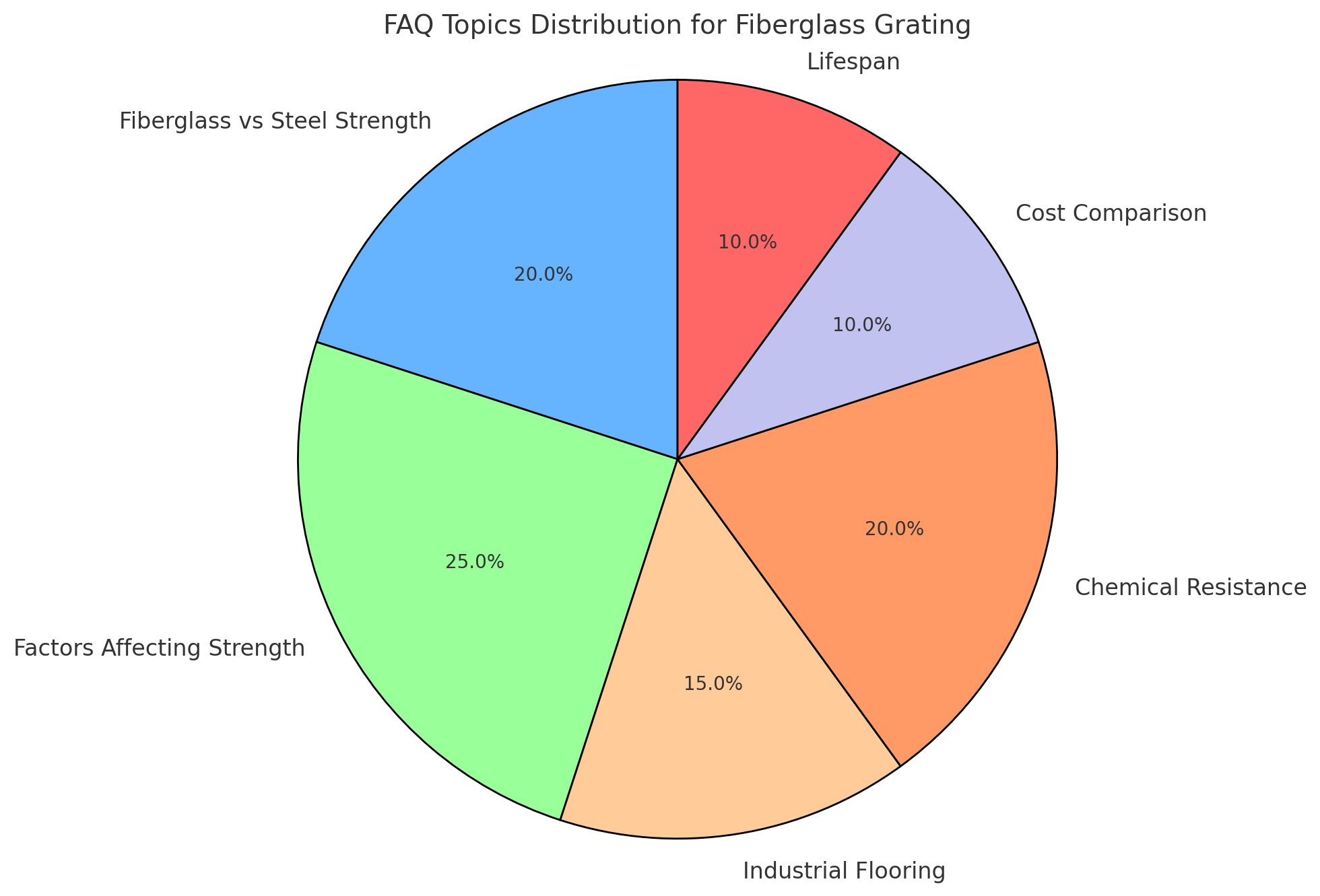
FAQ
Q: How strong is fiberglass grating compared to steel?
A: Fiberglass grating is significantly lighter than steel, yet it offers a superior strength-to-weight ratio, making it an excellent choice for many applications where steel might be too heavy or prone to corrosion.
Q: What factors affect the strength of fiberglass grating?
A: The strength of fiberglass grating depends on its material composition, resin type, thickness, and manufacturing method, such as pultrusion or molding, which influence its load-bearing capacity.
Q: Why is fiberglass grating a popular choice for industrial flooring?
A: Fiberglass grating is durable, corrosion-resistant, and can support heavy machinery and foot traffic, making it ideal for industrial flooring in harsh environments.
Q: Can fiberglass grating withstand exposure to chemicals?
A: Yes, fiberglass grating is highly resistant to a wide range of chemicals, making it suitable for use in chemical processing plants and other environments where exposure to harsh substances is common.
Q: How does the cost of fiberglass grating compare to metal grating?
A: While fiberglass grating may have a higher upfront cost than metal grating, its durability, resistance to corrosion, and low maintenance needs make it a more cost-effective long-term solution.
Q: What is the typical lifespan of fiberglass grating?
A: Fiberglass grating has a long lifespan, often lasting 20 years or more, depending on the application and environmental conditions, making it a reliable and low-maintenance choice.