![How to Build Safe Livestock Fences for Your Cattle]()
You keep cattle safe by choosing the right livestock fences that suit your land and herd. Planning a good layout and using the proper fencing materials is essential. Quality livestock fences keep cattle contained and protected from predators. They also reduce the risk of escapes or injuries. Studies show that strong livestock fences prevent up to 94% of predator attacks, helping you lose fewer cattle and save money. Using the right livestock fences enhances your cattle’s safety and safeguards your land.
Key Takeaways
Pick strong and long-lasting fencing materials like high-tensile or woven wire. These help keep cattle safe and lower the chance of injuries.
Put fence posts deep in the ground and space them right. Use strong bracing at corners and gates so the fence stays stable for a long time.
Use both visual and physical barriers to help cattle see and respect the fence. This lowers their stress and stops them from escaping.
Make fences tall enough, at least 54 inches high. Check for gaps so cattle cannot jump or crawl out.
Look at fences often and fix any damage fast. This keeps cattle safe from predators and saves money on big repairs.
Livestock Fences and Safety
Importance of Livestock Safety
You help keep your cattle safe by thinking about livestock safety. Safe livestock fences stop injuries, escapes, and protect your land. Experts say working with cattle can be dangerous. Many injuries happen because people make mistakes. Over half of cattle injuries are from rushing or not paying attention. You can lower these risks by learning how cattle act and using good fences.
Reason Category | Explanation |
Physical Risks | Farm work is risky. Handling cattle is dangerous and often ignored. |
Human Error | Most injuries happen from mistakes like being tired or careless. |
Animal Behavior | Knowing how cattle see and act helps you stay safe. |
Sensory Perception | Cattle see wide but not deep. They react to shadows and loud sounds. |
Flight Zone | Giving cattle space keeps them calm and safe. |
Facility Design | Good fences and layouts help lower stress and injuries. |
Herd Instinct | Cattle follow each other and need space. Crowding can cause accidents. |
You also need to think about laws and insurance. If cattle get out and cause damage, it can cost a lot. Insurance companies want strong livestock fences to lower risks. Good fences can help you pay less for insurance and avoid losing money.
Tip: Programs like EQIP and Farm Service Agency loans can help you get better fencing for more safety.
Containment and Visual Barriers
Livestock fences do more than show where your land ends. They keep cattle in and stop predators from getting in. Good fences help your animals feel less stress and stay safe. Studies show cattle learn to respect both real and virtual fences. When you use warning sounds or things they can see, cattle learn fast and avoid shocks. This helps lower stress and stops escapes.
You should use both things cattle can see and touch in your fences. Visual barriers like boards or colored tape help cattle know where to stop. Physical barriers like woven wire or electric fencing keep cattle from getting out. Using both makes your fence system strong and keeps cattle safe.
Some owners forget how dangerous cattle can be, which leads to injuries.
Calm and quiet handling helps cattle feel safe and lowers accidents.
When you pick the right livestock fences and take care of them, you keep your cattle, your land, and yourself safe.
Proper Fencing Materials
![Proper Fencing Materials]()
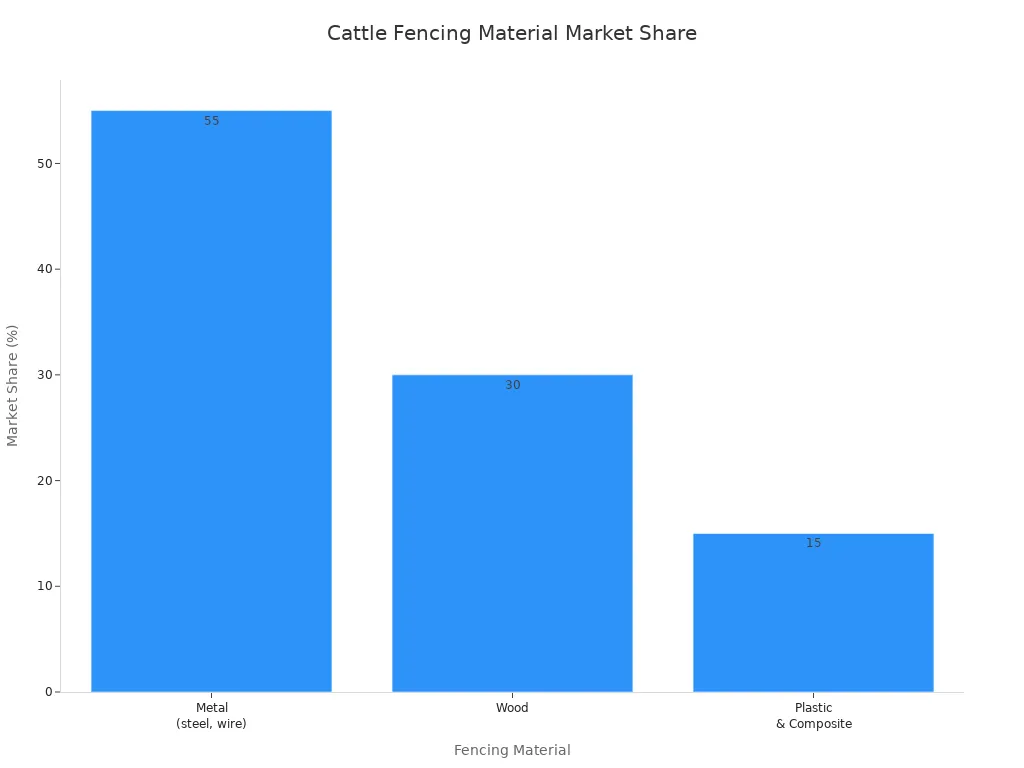
Choosing the best fence for cattle starts with understanding the most common cattle fence material options. In North America, you see wood and wire fencing used most often for cattle. Metal fencing, especially high-tensile steel wire, leads the market because it lasts long and stands up to tough weather. Wood fencing holds about 30% of the market, while plastic and composite fencing are less common for cattle. Concrete fencing is rare in cattle operations.
![Bar chart comparing market share of metal, wood, and plastic fencing materials for cattle in North America]()
Best Fence for Cattle
You want the best fence for cattle to keep your herd safe and your property secure. The best fence designs use strong materials and avoid gaps and sharp edges. High-tensile wire, woven wire, and hinged joint fencing are the main choices. Each type of cattle fence material has strengths and weaknesses.
High-tensile wire: This is the best fence for cattle if you want long life and low maintenance. High-tensile wire has a smooth surface, which lowers the risk of injury. It stretches less than other wires, so you need fewer posts. You can add an electric farm fence strand for extra security. This type of fencing is strong and resists animal pressure.
Woven wire: Woven wire fencing is another best fence for cattle. It uses a tight mesh that keeps cattle in and predators out. The fixed-knot design holds tension well and stands up to impacts. You can combine woven wire with an electric farm fence for even better results.
Hinged joint fencing: This type is less durable. It uses low-carbon steel, which stretches more and breaks easier. Hinged joint fencing needs more repairs and does not last as long as high-tensile or woven wire.
Note: Metal fencing, especially high-tensile and woven wire, is the best fence for cattle in most climates. Wood fencing looks nice but needs more care and does not last as long.
Woven Wire and High-Tensile Options
You need to know how each cattle fence material performs over time. Here is a table to help you compare the main types:
Fence Type | Average Lifespan | Durability & Strength Characteristics | Maintenance Requirements |
Hinged Joint Fence | ~10 years | Softer, low-carbon steel; stretches more; lower breaking strength; prone to rust and sagging | Needs frequent repairs; can deform easily |
High-Tensile Fixed-Knot | Up to 30 years | High-carbon steel; very strong; minimal stretch; resists corrosion and animal damage | Very low; almost maintenance-free |
Woven Wire (Fixed-Knot) | Up to 30 years | Strong mesh; holds tension; resists animal impact; enhanced coatings for corrosion resistance | Very low; long-lasting with good setup |
High-tensile fencing is the best fence for cattle if you want safety and durability. The smooth wire lowers injury risk, unlike barbed wire. Woven wire fencing gives you a tight barrier, so cattle cannot push through or get stuck. Both types work well with electric farm fence strands for extra control.
Hinged joint fencing costs less at first but needs more repairs.
High-tensile and woven wire fencing cost more up front but save money over time.
You avoid gaps and sharp edges by choosing high-tensile or woven wire, which keeps cattle safe.
Tip: Always check your fence for gaps. Even small gaps let cattle escape or get hurt.
Post Spacing and Fence Height
Proper fencing means you set posts and wire at the right height and distance. For cattle, experts recommend a fence height of at least 54 inches. This keeps even large cattle from jumping over. Most farmers space posts 16 to 20 feet apart for high-tensile and woven wire fences. Closer post spacing adds strength, especially in corners or gates.
Use strong corner posts and brace them well.
Make sure the bottom wire or mesh is close to the ground to stop cattle from crawling under.
For electric farm fence setups, keep wires tight and at the right height for your cattle.
Note: Climate and soil affect your fence. In sandy or loose soil, set posts deeper. In cold or wet areas, check your fence more often for damage.
Combining Materials for Different Livestock Needs
If you raise more than just cattle, you need to combine fencing types. The best fence for cattle may not work for sheep, goats, or pigs. Many farmers use woven wire for the main fence and add electric farm fence wires for extra control. For sheep and goats, add more wires lower to the ground. For pigs, use woven wire with an electric strand near the bottom. Poultry need special netting.
Combining fencing materials lets you adjust paddocks for rotational grazing. You can use portable electric farm fence systems for quick changes. This helps you manage pasture and keep all animals safe.
Callout: Training your cattle and other livestock to respect electric farm fence wires makes your fencing system more effective and reduces escapes.
You get the best fence for cattle by using proper fencing materials, setting posts at the right height and spacing, and combining systems for different animals. Always check for gaps and keep your fence in good shape. Investing in high-quality cattle fence material and regular maintenance gives you a safe, long-lasting fence.
Fence Construction Steps
Setting Posts and Bracing
You start building strong cattle fencing by setting posts and bracing them well. Good posts keep your fencing stable and safe for many years. If you skip this step or rush it, your fencing will not last and your cattle may escape.
First, dig each fence post hole at least two feet deep. This depth helps your posts stay upright, even in bad weather or soft soil. Place each post straight up and down. Fill the hole with concrete, but stop the concrete about two to four inches below the ground. This keeps the post safe from tripping hazards and helps water drain away. If you see concrete sticking out above the ground, chip it away.
You need to control weeds and grass around your posts. Plants hold moisture, which can make metal posts rust or wood posts rot. For extra strength, weld steel end assemblies at corners and gates. Screws alone may not hold up if your cattle push against the fencing or if the ground shifts. Check screws and welds often. Tighten or fix them if they get loose. If you find a post or rail that is broken, replace it right away.
Bracing is very important at corners and ends. Use strong wood or steel for braces. A good brace keeps the fencing tight and stops posts from leaning. Add extra bracing at gates, since cattle often push or rub against these spots.
Tip: Investing in strong posts and bracing saves you money over time. You will not need to rebuild your fencing as often.
Attaching Wire or Panels
After you set your posts, you attach the wire or panels. This step keeps your cattle inside and stops them from breaking the fencing. Start by spacing your posts no more than eight feet apart for the best strength. If you use high-tensile or woven wire, keep the mesh tight. Loose wire sags and lets cattle push through.
Use staples or fence ties to attach the wire mesh to each post. Hammer the staples in at an angle. This holds the wire better and stops it from pulling out. Pull the wire tight before you fasten it. If you use panels, bolt or tie them to the posts so they do not move.
Check the tension of your wire often. Over time, cattle may lean or rub on the fencing, which can loosen the wire. Tighten it if you see any sagging. You can add an electric wire to woven wire fencing. This gives your cattle a shock if they touch it, so they learn to stay away. Electric fencing adds a strong barrier and helps prevent escapes.
Note: Mixing different metals, like galvanized and non-galvanized, can cause rust. Use the same type of metal for all parts of your fencing.
Gates and Entry Points
Gates are the main way you move cattle in and out of pastures. You need to install gates that are strong, easy to use, and safe for both you and your cattle. Gather all your tools and materials before you start. You need a gate, hinges, bolts, a drill, a level, and concrete.
Line up the gate with the center of the hinge post. Use a string to make sure it is straight. Place a brace post across from the hinge post. Cut notches in the brace post to hold it in place. Connect the hinge and fence posts with strong spikes and strainer wire. This supports the weight of the gate and keeps the fencing tight.
Set the hinge post in dry concrete and make sure it stands straight up. Drill holes for the hinge bolts. Use all-thread bolts so you can adjust the gate later if needed. Attach the top hinge with the bolt pointing down. This stops cattle from lifting the gate off the hinges. If you have two gates that meet, leave a small gap and make sure the tops line up.
Place gates where you can easily move tractors, trailers, and cattle. Wide gates help you avoid bottlenecks and make chores faster. Use strong locks to keep your cattle safe and prevent people from opening the gates without permission. Reinforce gates in busy areas with extra bracing and strong materials.
Always secure all gates after moving cattle. Never use a gate to push cattle, as this can hurt them or cause stress. Make sure the area is clear before you close the gate behind your cattle.
Poorly installed gates can lead to escapes or injuries. If a latch slips or a gate sags, cattle may get out or hurt themselves. Never leave cattle alone in chutes or pens with open gates. Panicked cattle can break fencing or injure each other. Use gates and fencing that cattle can see clearly, so they do not run into them.
Common Gate Problems | How to Prevent Them |
Sagging or leaning gates | Use strong bracing and check hinges |
Latches that slip | Use quality locks and check often |
Gaps at gate edges | Extend fencing right up to the gate |
Poor placement | Plan for easy access and traffic flow |
Callout: Place gates where you need them most. This saves time and keeps your cattle calm during moves.
You face many challenges when building cattle fencing. These include choosing the right materials, bracing corners, and placing gates well. You also need to think about local rules, weather, and how much pressure your cattle put on the fencing. Regular checks and repairs keep your fencing strong and your cattle safe. Many ranchers now use electric fencing, solar power, and even wireless monitors to make fencing easier to manage.
Building cattle fencing takes time and care. When you set posts deep, brace corners, attach wire tightly, and install gates the right way, you protect your cattle and your investment.
Protection from Predators and Maintenance
Predator Barriers
You need strong barriers to keep cattle safe from predators. Many ranchers use different fencing types for better protection. Start with metal mesh or woven wire fences. These fences block small predators and are hard to climb. In places with many predators, build fences at least 6 feet tall. If you have very agile predators, make the fence 8 feet high.
To stop digging, bury the fence at least 12 inches deep. You can also add a wire skirt that sticks out from the bottom. This stops predators from digging under your fence. Add electric farm fence wires at the top and bottom for extra safety. Electric wires scare predators and make the fence stronger.
Here is a quick guide to common predator barriers:
Predator Barrier Type | Description & Effectiveness | Key Considerations |
Hard-Wire Fencing | Steel mesh with electric farm fence wires; blocks most predators. | Must be tall and well-braced. |
Permanent Electric Fencing | Multi-wire electric farm fence; proven to stop coyotes and other predators. | Needs regular checks and good grounding. |
Temporary Electric Fencing | Portable electric farm fence; works for short-term or small pastures. | Lower cost but shorter lifespan. |
Fladry/Turbo Fladry | Flags or electrified tape; scares off wolves and some predators. | Works best in small areas; predators may adapt over time. |
You can make fences safer by adding lights that turn on when they sense movement. Some ranchers use guard animals to help protect cattle. Electric fencing is very important for keeping predators out.
Regular Inspection and Repairs
You need to check your fences often to keep cattle safe. Walk along your fences, especially after storms or in busy spots. Look for loose wires, leaning posts, broken boards, or sagging parts. Check gates and latches to make sure they work right.
Follow this inspection schedule for the best results:
Check fences all year to find damage early.
Look more often near water and busy areas.
In spring, look for posts broken by winter.
In summer, check if wires are tight and posts are straight.
In fall, get fences ready for cold weather.
In winter, clear snow and ice and check for weak spots.
Fix small problems right away so they do not get worse. This saves money and keeps cattle safe from predators. Use good materials like UV-resistant coatings and strong posts for longer-lasting fences. Well-kept fences stop escapes, help manage pastures, and make cattle more productive.
Tip: Paying for expert help and regular care gives you better protection and peace of mind.
You make safe livestock fences by picking strong materials. Plan your fence layout before you start building. Check your fence often to find problems early. High-tensile, fixed-knot wire fencing lasts a long time. It does not need as many repairs as other types. Good post spacing and strong bracing help your fence stay up.
Fixed-knot designs hold wires tight and stand up to animals.
Class 3 galvanization helps your fence last longer.
You do not need to fix the fence as much, so you save time and money.
Predator barriers and electric wires help keep cattle safe.
If you buy good fencing and check it often, you protect your cattle. You also feel less worried. Many cattle owners feel safer and happier when they use these tips.
FAQ
What is the safest type of fence for cattle?
High-tensile wire and woven wire fences offer the best safety. These fences resist pressure and prevent injuries. You can add electric wires for extra protection. Avoid barbed wire because it can hurt your cattle.
How often should you inspect your cattle fences?
You should check your fences at least once a month. After storms or heavy use, inspect them right away. Look for loose wires, leaning posts, or broken gates. Quick repairs keep your cattle safe.
Can you use electric fencing for cattle?
Yes, you can use electric fencing. Electric wires teach cattle to respect boundaries. Always train your cattle to recognize the fence. Use warning signs to keep people safe.
What is the recommended height for a cattle fence?
Experts suggest a fence height of 54 inches for adult cattle. This height stops cattle from jumping over. For calves, you may need lower wires to prevent escapes.
How do you keep predators out of cattle pastures?
Use tall woven wire or mesh fences.
Bury the bottom of the fence to stop digging.
Add electric wires at the top and bottom.
Check for gaps and fix them quickly.