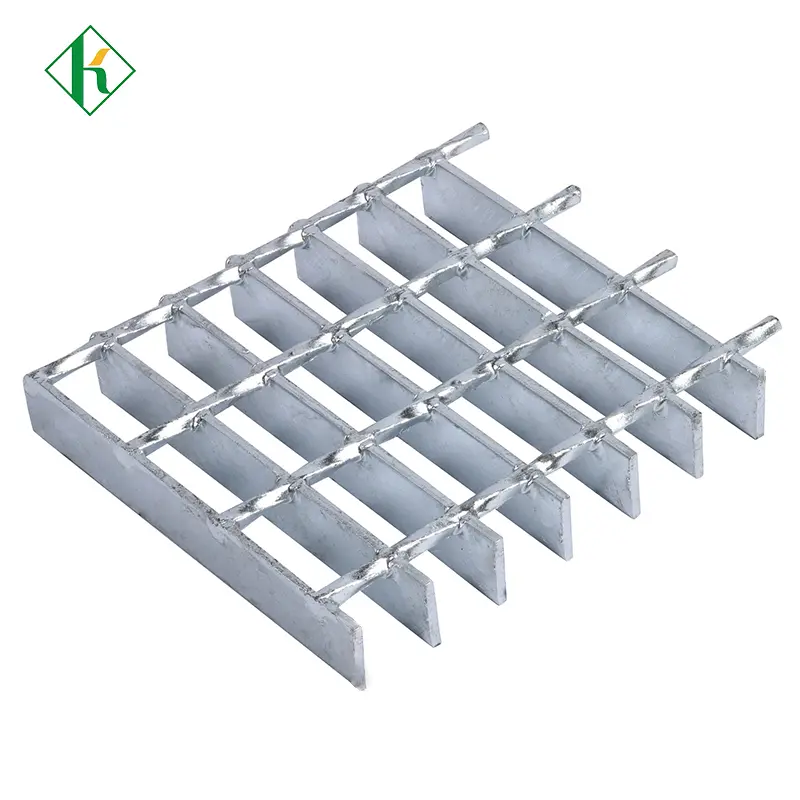
In industrial environments like ports, refineries, and busy warehouses, grating failure is not just an operational nuance—it is a catastrophic safety risk. A single structural collapse can halt production lines, damage expensive machinery, or cause severe injury. This reality leads many engineers to question the viability of open mesh flooring. Can Galvanized Steel Grating truly handle extreme loads from forklifts and semi-trucks compared to solid concrete or steel plates?
The verdict is a definitive yes, provided the specification matches the structural calculations regarding span, bar depth, and traffic type. Choosing the right product is not about guessing; it is about engineering physics. This guide moves beyond basic definitions to cover critical load charts, safety factors, and the ROI of galvanized durability in high-stress zones. We will explore how to ensure your facility remains safe and operational for decades.

Key Takeaways
Load Definition: Heavy-duty suitability is defined by the bearing bar depth (up to 100mm) and spacing density, not just the material itself.
Critical Safety Rule: The direction of the span relative to supports is the single most critical factor in preventing structural collapse; bearing bars must run perpendicular to supports.
Corrosion as a Structural Risk: Hot-dip galvanization is not merely aesthetic; it preserves the structural integrity (load rating) by preventing cross-section loss due to rust.
Standards Compliance: Proper selection requires aligning with traffic ratings (e.g., EN 1433 Class D400-E600 or ANSIAAMM standards).
ROI Reality: While initial costs are higher than untreated steel, the 40-50 year service life of galvanized grating offers the lowest Total Cost of Ownership (TCO) for outdoor industrial sites.
Decoding Load-Bearing Capacity: What Makes Grating Heavy-Duty?
To select the right product, you must first understand the technical DNA of the material. A grating panel consists of two main components: bearing bars and cross rods. The bearing bars are the load carriers. They do 90% of the structural work. Cross rods exist primarily to maintain spacing and provide lateral stability. They do not support weight directly.
The mathematics of strength is straightforward but powerful. The Load-bearing capacity of steel grating increases linearly with the thickness of the bearing bar but increases squarely with its depth. This means doubling the depth of a bar quadruples its strength. For vehicular traffic, standard 1-inch grating is rarely sufficient. Heavy-duty specifications typically start at depths of 2 x 3/16 (50mm x 5mm) and can go up to 4 (100mm) for extreme loads.
Static vs. Dynamic Loads
Engineers must differentiate between load types. A Uniform Distributed Load (UDL) represents crowded pedestrian walkways where weight is spread evenly. Industrial floors, however, face Concentrated Point Loads. A forklift wheel concentrates thousands of pounds into a tiny surface area. This requires a much stiffer panel design.
We also look at deflection limits. Standard engineering practice usually limits deflection to Span/300 or Span/200. If a floor bends too much, it causes bounciness. This instability creates worker fatigue and can destabilize precision equipment moving across the floor.
The Span Direction Trap
The most common cause of installation failure is improper orientation. The span is the dimension parallel to the bearing bars. For the grating to work, these bars must run perpendicular to the supports (beams). If you install the panel with bearing bars parallel to the supports, the grating has zero structural strength. It will collapse under minimal weight. Always double-check the span direction on your drawings.
Traffic Classifications
You should categorize your site needs based on established standards. References like AASHTO H-20 (for highway truck loads) or EN 1433 classes help clarify requirements. For example, Class C250 fits parking lots, while Class F900 is for airport runways. Aligning your specs with these classes ensures safety compliance.
The Safety Equation: Galvanization, Slip Resistance, and Durability
Strength is not just about the initial installation; it is about performance over time. In aggressive environments, corrosion is a structural risk. Rust eats away at the steel thickness. A mere 10% reduction in bar thickness can significantly reduce the safe working load of a platform. This degradation turns a safe walkway into a hazard.
Hot-dip galvanization solves this. It creates a metallurgical bond between zinc and steel. This layer provides Safety features of galvanized grating that paint cannot match. The zinc acts as a sacrificial anode. If the surface gets scratched, the surrounding zinc corrodes first to protect the steel. This self-healing ability maintains the load rating for decades, even in humid or saline atmospheres.
Slip Resistance Features
Industrial floors often get wet, oily, or muddy. Smooth metal bars become dangerous slides in these conditions. For offshore platforms or chemical plants, we recommend serrated surfaces. Serrations increase friction coefficients significantly.
Statistics suggest that better traction can reduce slip-and-fall incidents by approximately 20-25%. This simple specification change supports broader safety compliance goals under OSHA or ADA regulations. It is a small detail that prevents costly accidents.
Environmental Resilience
Steel offers superior resilience compared to synthetics. It expands and contracts far less than plastics during extreme temperature fluctuations. Furthermore, Grating performance in heavy environments relies on fire resistance. Unlike Fiberglass (FRP), galvanized steel is non-combustible. It maintains structural integrity longer during a fire event, providing crucial time for evacuation.
Critical Specification Criteria for High-Load Environments
Selecting the right product requires a systematic approach. We use a four-step decision framework to ensure nothing is overlooked.
The Selection Matrix
Step 1: Define the Load. Identify the heaviest object that will cross the floor. Is it a 5-ton forklift, a pallet jack, or just human foot traffic? Vehicular loads dictate heavy-duty specs immediately.
Step 2: Determine the Span. Measure the distance between supports. Longer spans require significantly deeper bars to maintain the same load rating. A 4-inch deep bar might be needed for a long span that a 2-inch bar could handle over a short gap.
Step 3: Mesh Density. Standard industrial grating usually follows a 19-W-4 pattern. However, Heavy-duty steel grating often utilizes a 15-W-2 pattern. This tighter mesh provides more steel surface area under the wheel. It reduces point pressure and minimizes damage to solid rubber tires.
Step 4: Banding. Heavy-duty panels require load-banding. This involves welding a flat bar to the cut ends of the panel. Banding helps transfer loads effectively and prevents the bearing bars from twisting under the torque of turning wheels.
Manufacturing Method Matters
Not all grating is built the same. The manufacturing process affects durability under dynamic stress.
Welded (Heavy Duty): This is the best choice for vehicular loads. The electrically fused joints provide maximum lateral rigidity. They resist the vibration and impact of moving traffic better than any other type.
Press-Locked: These panels are cleaner and more aesthetically pleasing. They are great for architectural designs but must be carefully evaluated for heavy rolling loads. The joints rely on friction and pressure rather than fusion.
Riveted/Clinched: You often see these in older infrastructure. They are excellent for specific high-impact scenarios or where truss-like stiffness is required.
Installation Best Practices and Long-Term TCO
Even the strongest Steel grating for industrial use will fail if installed poorly. The connection between the panel and the structure is the final safety barrier.
Fixing Methods & Safety
For areas with heavy vehicular traffic, welding is the gold standard. We recommend tack welding the panels directly to the supports. This provides the most secure connection against the constant vibration of machinery. However, there is a caveat. You must use zinc-rich paint on all weld spots. Welding burns off the galvanization, creating a rust entry point if not treated immediately.
Saddle clips or bolts are suitable for maintenance access areas where grating is removed frequently. If you use bolts in a high-vibration zone, safety becomes a concern. Machinery vibration can loosen nuts over time. You must use lock washers or implement regular checking protocols to ensure they stay tight.
Total Cost of Ownership (TCO) Analysis
Managers often focus on the upfront price, but the Total Cost of Ownership tells the real story. Painted carbon steel is cheaper initially. However, it requires repainting every 3 to 5 years in aggressive environments. This involves labor costs, material costs, and expensive downtime.
| Factor | Painted Carbon Steel | Hot-Dip Galvanized Steel |
| Initial Cost | Low | Moderate |
| Maintenance Cycle | Repaint every 3-5 years | Maintenance-free |
| Service Life | 10-20 years (with upkeep) | 40-50+ years |
| TCO (20 years) | High (Labor + Downtime) | Lowest |
Galvanized steel often serves for 40-50+ years without maintenance. While it costs slightly more upfront, it eliminates the downtime costs associated with replacement or maintenance closures. For a busy port, one day of closure costs far more than the price difference in materials.
Maintenance & Inspection
Routine checks are simple but vital. Look for bent cross rods, which usually indicate overloading. Check clip tightness to ensure panels haven't shifted. These visual protocols prevent small issues from becoming accidents.
Material Selection: When to Choose Galvanized Steel Over Alternatives
It is helpful to compare galvanized steel against other common materials to confirm it is the right choice for your specific project.
Galvanized Steel vs. Aluminum
Aluminum is lightweight and non-sparking, which makes it good for volatile refinery zones. However, steel has a much higher Modulus of Elasticity. This means it deflects less under heavy loads. For static platforms carrying heavy equipment, steel is far more cost-effective. Aluminum is often too flexible for long spans with high weight.
Galvanized Steel vs. Fiberglass (FRP)
FRP is chemically inert, making it perfect for acid baths or highly corrosive chemical storage. However, it is brittle. Under high-impact loads or heavy rolling traffic, FRP can crack or snap. It also degrades under UV light over time. Steel remains the only viable choice for extreme rolling loads like forklifts.
Galvanized Steel vs. Stainless Steel
Stainless steel is superior for hygiene in food processing or extreme chemical pH environments. The downside is cost. Galvanized steel offers 80% of the performance for 30-40% of the cost in general outdoor applications. Unless you have specific sanitary requirements, Industrial grating safety standards usually point toward galvanized steel as the logical economic choice.
Conclusion
Galvanized steel grating remains the industry standard for heavy-duty environments for good reason. It offers an unmatched combination of high strength-to-weight ratio, impact resistance, and corrosion-resistant longevity. It handles the abuse that would shatter fiberglass and bend aluminum.
However, safety is a calculation, not a feeling. You cannot simply order standard grating and expect it to hold a truck. You must verify the Load ratings for galvanized grating relative to the specific Clear Span of your project. Always check the load table. If you are unsure, request a custom load analysis or consult with a structural engineer before finalizing your specifications. Investing time in the specs now will prevent catastrophic failure later.
FAQ
Q: What is the maximum span for heavy-duty steel grating?
A: The maximum span depends entirely on the bearing bar depth and the intended load. A deeper bar (e.g., 4 inches) can span much further than a 2-inch bar. However, as the load increases (like with heavy trucks), the allowable span decreases significantly to prevent deflection. Always consult a load table specific to your traffic class.
Q: Can galvanized grating support forklift traffic?
A: Yes, but standard pedestrian grating cannot. You must specify Heavy-Duty grating. This typically involves welded construction with thicker bearing bars (minimum 5mm thick) and tighter mesh spacing to support the point load of the wheels.
Q: How does galvanization affect the load-bearing capacity?
A: Galvanization does not increase the structural strength of the steel directly. Instead, it preserves the load-bearing capacity by preventing rust. Without it, corrosion reduces the cross-sectional area of the steel bars, causing a loss of strength over time.
Q: What is the difference between Standard and Heavy-Duty grating?
A: The main differences are bar thickness, depth, and spacing. Standard grating is designed for human foot traffic (UDL). Heavy-duty grating uses deeper, thicker bars and often tighter mesh to handle dynamic rolling loads from vehicles and machinery.
Q: How do I measure the span direction correctly?
A: The span is the dimension parallel to the bearing bars. It is the distance the bar must bridge between supports. Improper orientation—placing bearing bars parallel to the supports—is a major safety hazard and causes immediate structural failure.