Metal grating is an essential material used in many industries. Its durability and strength make it ideal for heavy-duty applications, from walkways to industrial platforms.
In this article, we’ll explore the different types of metal grating, focusing on steel grating and its unique benefits. You’ll learn how to choose the right grating for your specific needs, including applications in construction, safety, and drainage.
Definition and Function
At its core, metal grating refers to a series of metal bars or wires, often made of materials such as steel, aluminum, or stainless steel, arranged in a grid pattern. The spaces between these bars are essential for allowing air, light, and water to pass through while providing a solid, stable surface for walking or other uses.
The primary function of metal grating is to serve as a support structure that can handle both pedestrian traffic and heavier industrial loads. Whether used as floor panels, walkways, stair treads, or trench covers, metal grating is valued for its ability to combine strength, stability, and safety, making it an indispensable material in many industries, such as manufacturing, construction, and municipal infrastructure.
Basic Components of Metal Grating
The basic structure of metal grating consists of two key components:
Bearing Bars: These are the main load-bearing elements of the grating. They run parallel to each other and are designed to carry the weight placed on the grating. Bearing bars can be made from various materials, with steel being one of the most common due to its high strength and durability.
Cross Bars: These are the bars that intersect with the bearing bars, forming the grid structure. The cross bars hold the bearing bars in place and provide additional strength and stability. They are typically welded, pressed, or swaged into place depending on the grating type.
In addition to the bearing bars and cross bars, the spacing between the bars is crucial to determine the grating’s load-bearing capacity and the amount of light, air, and water it allows through. The spacing is typically standardized, but it can vary depending on the application.
Types of Metal Grating
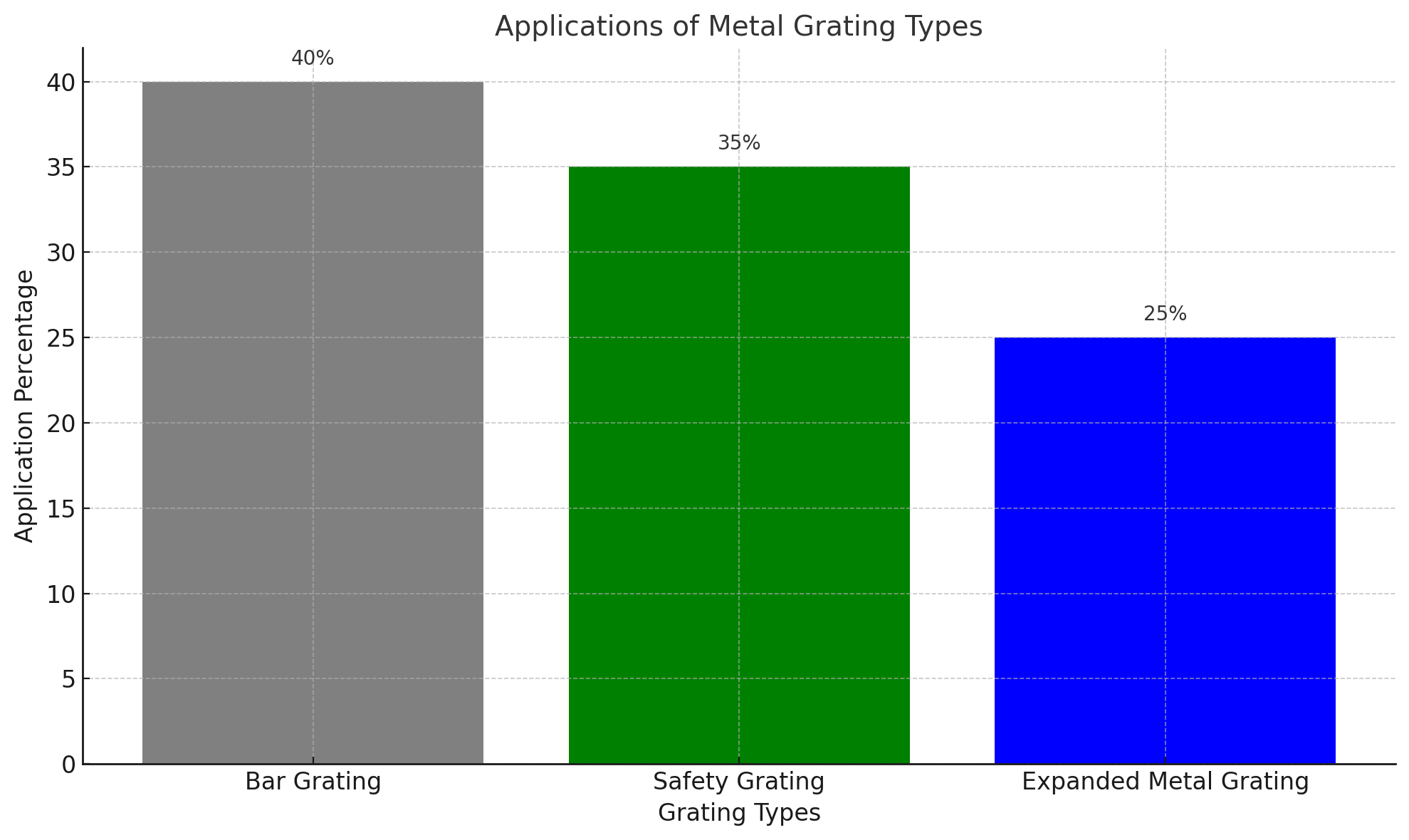
There are several different types of metal grating, each designed for specific applications and with unique manufacturing processes. The most common types include bar grating, safety grating, and expanded metal grating.
Bar Grating
Bar grating is one of the most commonly used types of metal grating and is particularly popular in industrial applications. Bar grating is made by joining parallel bars (bearing bars) with perpendicular bars (cross bars) to form a grid-like structure. The bars can be connected using different methods, including welding, press-locking, and swage-locking.
Welded Steel Grating
This type of grating is created by welding the bearing bars and cross bars together. The welding process makes the grating strong, durable, and versatile, which is why it is commonly used in various industrial settings. It’s known for its excellent load-bearing capacity and is available in both plain and serrated surface options for better traction.
Press-Locked and Swage-Locked Grating
These types of bar grating are produced using hydraulic pressure to lock the cross bars into place, without the need for welding. This process makes the grating easier to manufacture and suitable for applications where a smoother, more refined appearance is needed. While press-locked grating is ideal for many general-purpose applications, swage-locked grating is often used in environments where a more refined aesthetic is desired.
Safety Grating
Safety grating is specifically designed to increase traction and prevent slip accidents. It is particularly useful for high-traffic areas where pedestrian safety is a primary concern, such as walkways, stair treads, and industrial platforms.
Diamond-Strut Safety Grating
This type of grating features a series of raised diamond-shaped protrusions that create a rough surface, helping to improve traction. It is ideal for use in environments where slip resistance is critical, such as in industrial and commercial settings.
Traction-Grip Safety Grating
Traction-grip safety grating also provides enhanced traction but features perforated buttons or raised surfaces that help to prevent slips. It is commonly used in environments where wet conditions may pose a higher risk of slipping, such as in food processing facilities, wet outdoor areas, or platforms exposed to the elements.
Expanded Metal Grating
Expanded metal grating is produced by taking a flat sheet of metal and then expanding it to create a diamond pattern. The process leaves no waste material and maintains the strength of the metal. Expanded metal grating is commonly used in applications where ventilation, light transmission, and visibility are important, such as in security fencing, platforms, or mesh flooring.

Applications of Metal Grating
The versatility of metal grating means it can be used across a wide range of industries and applications. Some of the most common uses include:
Industrial Platforms and Walkways
Metal grating is widely used in factories, warehouses, and other industrial settings to create sturdy, durable platforms and walkways. The open-grid structure allows for proper drainage and ventilation while providing a safe, solid surface for employees to walk on.
Drainage Covers and Trench Grates
In infrastructure and construction, metal grating is often used as drainage covers and trench grates. These grates allow water and debris to pass through while preventing objects or people from falling into the trenches.
Stair Treads and Safety Barriers
Metal grating is also used in the construction of stair treads and safety barriers, offering a slip-resistant surface in high-traffic and potentially hazardous areas.
Benefits of Metal Grating
Metal grating offers several distinct advantages, which contribute to its widespread use across various industries:
Durability and Strength
One of the primary benefits of metal grating is its ability to withstand heavy loads and harsh conditions. Whether it’s supporting industrial machinery, foot traffic, or vehicles, metal grating provides reliable strength and stability.
Corrosion Resistance
Many types of metal grating, particularly steel grating, are treated with coatings such as galvanization to protect against rust and corrosion. This makes metal grating suitable for use in environments where moisture or exposure to chemicals is a concern.
Low Maintenance
Metal grating is easy to clean and maintain. Its open-grid structure prevents debris accumulation, and it generally requires minimal upkeep to remain functional and safe.
Choosing the Right Metal Grating for Your Project
When selecting the right metal grating for your project, several factors should be considered:
Material
The material of the grating will affect its strength, durability, and resistance to corrosion. Steel grating is often chosen for its strength, but for environments prone to corrosion, aluminum or stainless steel grating may be preferred.
Load Requirements
Different applications require different load-bearing capacities. It’s essential to choose a grating type that can support the expected weight and traffic.
Safety Features
For pedestrian applications, safety features such as slip resistance may be crucial. Safety grating with serrated surfaces or traction-grip designs are ideal for high-traffic areas.
Customization Options
Custom metal grating solutions can be fabricated to meet the exact specifications of a project, ensuring a perfect fit and optimal performance.
Steel Grating: A Closer Look
Steel grating is one of the most widely used types of metal grating. It is particularly valued for its strength, durability, and load-bearing capacity, making it the ideal choice for heavy-duty industrial applications.
What is Steel Grating?
Steel grating is made from steel bars that are welded or press-locked into place to form a grid. Its high strength and ability to support significant loads make it ideal for use in industrial settings, such as factories, warehouses, and platforms.
Advantages of Steel Grating
Steel grating offers several advantages, including:
● High load-bearing capacity: Steel grating can support heavy machinery and equipment, making it ideal for industrial use.
● Durability: Steel grating is designed to withstand wear and tear, even in harsh environments.
● Corrosion resistance: Galvanized steel grating is resistant to rust, making it suitable for use in wet or corrosive environments.
Steel Grating vs. Other Materials
When compared to other materials like aluminum or fiberglass, steel grating stands out due to its strength and durability. While aluminum grating is lighter and more corrosion-resistant, steel grating offers a higher load-bearing capacity, making it the preferred choice for heavy-duty applications.
Conclusion
Metal grating is a versatile material widely used in industrial, commercial, and construction applications. It offers durability and strength for walkways, drainage covers, and safety surfaces. Steel grating, known for its high load-bearing capacity, is ideal for heavy-duty projects. Safety and expanded metal gratings provide excellent traction for pedestrian areas. By considering factors like material, load capacity, and safety features, you can choose the right grating for your needs. For reliable and high-quality metal grating solutions, Kaiheng offers products designed to meet the demands of any project.
FAQ
Q: What is metal grating?
A: Metal grating is a structure made from parallel metal bars arranged in a grid pattern. It provides support, strength, and safety in industrial, commercial, and public spaces.
Q: What is steel grating used for?
A: Steel grating is used for creating durable walkways, drainage covers, platforms, and stair treads. Its high strength and load-bearing capacity make it ideal for heavy-duty applications.
Q: What are the benefits of metal grating?
A: Metal grating offers durability, corrosion resistance, and low maintenance. It’s suitable for various applications like walkways and drainage systems due to its strength and longevity.
Q: How is steel grating made?
A: Steel grating is made by welding, press-locking, or swage-locking metal bars together, forming a strong, durable grid structure. It's commonly used for industrial flooring and platforms.
Q: What is the difference between steel grating and safety grating?
A: Steel grating is designed for load-bearing, while safety grating features a textured surface to prevent slips, making it ideal for walkways and high-traffic areas.