Introduction
Stainless steel grating is a versatile, corrosion-resistant material widely used in industrial and commercial applications. It provides strength, durability, and safety, making it ideal for environments requiring heavy traffic support, efficient drainage, and long-lasting performance.
In this article, we’ll explore what stainless steel grating is, its types, and its key benefits. We’ll also discuss its common applications and how it compares to other types of steel grating.
What is Stainless Steel Grating?
Definition and Function
Stainless steel grating is a type of metal grid formed by joining stainless steel bars together to create an open, grid-like structure. The structure is designed to withstand heavy loads while allowing water, air, light, and debris to pass through. The key feature of stainless steel grating is its strength, corrosion resistance, and versatility, making it suitable for many applications in industries like construction, manufacturing, and chemical processing.
The primary function of stainless steel grating is to provide a stable, slip-resistant surface while facilitating drainage and ventilation. Its open grid design allows for effective water flow and air circulation, making it ideal for environments where hygiene and safety are a priority.
Composition and Materials
Stainless steel grating is typically made from high-grade stainless steel alloys, most commonly 304 and 316 grades. These grades are known for their excellent resistance to rust, corrosion, and staining, making them ideal for harsh environments.
● 304 Stainless Steel Grating: Offers good corrosion resistance and is suitable for most applications, including food processing plants, chemical processing, and indoor use.
● 316 Stainless Steel Grating: Contains molybdenum, which provides enhanced resistance to chloride-induced corrosion, making it the preferred choice for marine environments, coastal areas, and chemical plants exposed to harsh chemicals.
The material's ability to withstand extreme temperatures, humidity, and exposure to chemicals contributes to its growing popularity in industries where durability and safety are critical.
Manufacturing Process
The manufacturing process for stainless steel grating involves several methods, depending on the type of grating being produced. Common techniques include:
● Welding: Used for welded stainless steel grating, where bearing bars are fused with cross bars, creating a strong and rigid structure. This is ideal for heavy-duty applications.
● Press-Locking: In this method, cross bars are mechanically pressed into notches in the bearing bars, creating a smooth, uniform appearance. Press-locked grating is often used in architectural applications.
● Swage-Locking: This technique involves inserting round cross rods into notches in the bearing bars and swaging them into place, providing a durable and cost-effective grating solution for lighter-duty applications.
Each method has its own benefits, depending on the load-bearing requirements and the desired aesthetics of the grating.
Types of Stainless Steel Grating
Welded Stainless Steel Grating
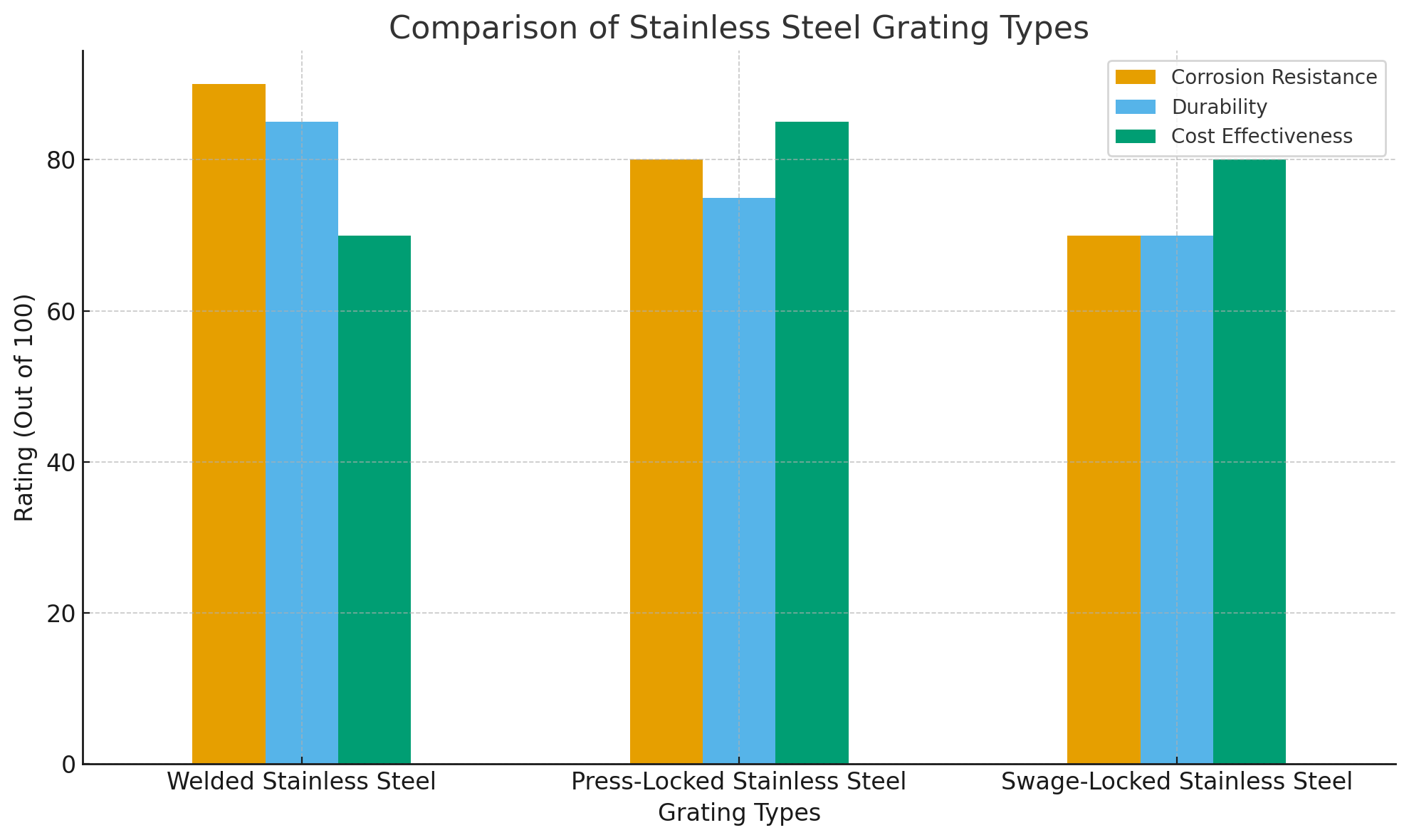
Welded stainless steel grating is one of the most commonly used types in industrial applications. This grating type involves welding the bearing bars to the cross bars at each intersection, ensuring a strong and durable connection. The resulting grating is ideal for heavy-duty environments like factories, power stations, and refineries.
The welded construction provides superior load-bearing capacity and resistance to impact, making it a reliable choice for areas with high foot traffic or heavy machinery.
Press-Locked Stainless Steel Grating
Press-locked grating is a mechanically-pressed solution, where cross bars are pressed into notches in the bearing bars without the need for welding. This creates a grating with a clean, smooth surface, making it ideal for architectural uses, such as facades, ventilation panels, and decorative elements.
This type of grating offers a high load-bearing capacity and is commonly used in commercial and industrial flooring. It provides a sleek appearance while maintaining the strength and durability of stainless steel.
Swage-Locked Stainless Steel Grating
Swage-locked stainless steel grating is used for lighter-duty applications, where the load-bearing demands are lower than in welded grating. The process involves inserting round cross rods into notches in the bearing bars and then swaging them into place, creating a strong, secure connection.
Swage-locked grating is a cost-effective option for applications that do not require the heavy-duty performance of welded grating. It is commonly used in platforms, walkways, and areas with less heavy traffic.

Benefits of Stainless Steel Grating
Corrosion Resistance
One of the main advantages of stainless steel grating is its resistance to corrosion. Stainless steel alloys, especially grades 304 and 316, are designed to withstand exposure to moisture, chemicals, and saltwater. This makes stainless steel grating an excellent choice for environments where other materials would corrode or degrade over time, such as marine, chemical, and wastewater applications.
Stainless steel's resistance to rust and corrosion ensures that it maintains its strength and appearance even in the harshest conditions, making it a long-lasting investment.
Durability and Long Service Life
Stainless steel grating is known for its exceptional durability. It can withstand heavy loads, impacts, and wear over time, making it ideal for industrial flooring, platforms, and other high-traffic areas. Its long service life reduces the need for frequent replacements, resulting in lower maintenance costs over time.
Additionally, stainless steel grating is resistant to environmental factors like UV rays, extreme temperatures, and chemicals, further enhancing its longevity.
Hygienic Properties
In industries like food processing, pharmaceuticals, and healthcare, hygiene is a critical consideration. Stainless steel grating provides a non-porous, easy-to-clean surface that resists bacterial growth. Its smooth finish prevents dirt and debris from accumulating, ensuring that the grating remains hygienic and easy to maintain.
The hygienic properties of stainless steel grating make it an ideal choice for environments that require strict sanitation standards, such as food manufacturing plants, hospitals, and clean rooms.
Common Applications of Stainless Steel Grating
Industrial Flooring and Platforms
Stainless steel grating is widely used in industrial applications for creating safe, slip-resistant flooring and platforms. It is particularly useful in factories, chemical plants, and power stations, where workers need to navigate hazardous areas safely.
The grating's open-grid structure allows for effective drainage and ventilation, ensuring that water and other fluids do not pool on the surface, which helps reduce slip-and-fall hazards.
Drain Covers and Trench Grates
Stainless steel grating is also used in drainage systems, where its open-grid design allows for efficient water flow while supporting heavy traffic loads. It is commonly installed in trench covers, stormwater drains, and other drainage applications, ensuring that water can be easily directed away from critical areas.
The corrosion resistance of stainless steel ensures that these grates maintain their strength and functionality in wet and harsh environments.
Food Processing and Pharmaceutical Use
In food processing plants and pharmaceutical facilities, cleanliness and hygiene are of the utmost importance. Stainless steel grating is used extensively in these industries due to its non-porous surface, which is resistant to bacterial growth. Its corrosion resistance ensures that it can withstand exposure to cleaning chemicals, maintaining its integrity and appearance over time.
Stainless steel grating helps maintain a clean, safe environment while facilitating proper drainage and ventilation in these high-demand industries.
Marine and Coastal Applications
Stainless steel grating is widely used in marine and coastal applications, including offshore platforms, ship decks, and docks. The 316 stainless steel grade, with its enhanced resistance to saltwater and corrosive environments, is particularly suited for these applications. Stainless steel grating provides a durable, low-maintenance solution that can withstand the harsh conditions of marine environments.
Stainless Steel Grating vs. Other Types of Metal Grating
Stainless Steel vs. Galvanized Steel Grating
While galvanized steel grating offers corrosion resistance at a lower cost, stainless steel grating excels in environments where exposure to moisture, chemicals, or saltwater is common. Stainless steel grating has a higher corrosion resistance, longer lifespan, and requires less maintenance than galvanized steel.
Galvanized steel grating may be suitable for less demanding environments, but stainless steel is the preferred option for industries that require superior performance and durability.
Steel vs. Stainless Steel Grating
Steel grating is often used in applications where strength and load-bearing capacity are essential. However, steel is more susceptible to rust and corrosion when exposed to harsh conditions. Stainless steel grating, on the other hand, offers a higher level of corrosion resistance and durability, making it ideal for use in challenging environments like food processing, marine, and chemical industries.
Customization and Sizing of Stainless Steel Grating
Custom Fabrication Options
Stainless steel grating can be customized in terms of size, bar thickness, and load-bearing capacity to meet specific project requirements. Custom fabrication ensures that the grating fits perfectly within the design specifications, whether it's for industrial flooring, drainage systems, or architectural features.
Standard Sizes and Configurations
Stainless steel grating is available in various standard sizes, with different bar spacing and thicknesses. These configurations impact the grating's load-bearing capacity and suitability for specific applications. Common sizes include 4' x 8' panels, with bar spacings ranging from 2" to 4".
Understanding the standard sizes and configurations of stainless steel grating helps in selecting the right type for your project.
Conclusion
Stainless steel grating is a durable, corrosion-resistant material used in various applications, from industrial flooring to drainage systems. It offers excellent strength, safety, and hygiene, with a long service life and low maintenance. For projects requiring performance and durability, consider the material grade, load-bearing needs, and environmental factors. Kaiheng’s stainless steel grating provides reliable solutions tailored to meet specific project requirements, ensuring optimal performance in demanding environments.
FAQ
Q: What is stainless steel grating?
A: Stainless steel grating is a corrosion-resistant material made of stainless steel bars, designed for strength, ventilation, and drainage. It's commonly used in industrial, commercial, and architectural applications.
Q: How does stainless steel grating differ from regular steel grating?
A: Stainless steel grating offers superior corrosion resistance and durability compared to regular steel grating, making it ideal for harsh environments such as marine and chemical areas.
Q: What are the benefits of stainless steel grating?
A: Stainless steel grating is durable, corrosion-resistant, easy to clean, and provides long-lasting performance, especially in environments requiring hygiene and strength.
Q: Where is stainless steel grating typically used?
A: Stainless steel grating is used in industrial flooring, platforms, drainage systems, and architectural features, particularly in food processing, pharmaceuticals, and marine industries.
Q: Is stainless steel grating customizable?
A: Yes, stainless steel grating can be customized in terms of size, bar thickness, and load-bearing capacity to meet specific project requirements.