Introduction
Metal grating is essential in various industries due to its strength and versatility. It provides durable and safe surfaces for flooring, walkways, and drainage systems.
In this article, we’ll explore the different types of metal grating, such as steel grating, and their key benefits. You will also learn how to choose the right grating for your needs, whether for industrial or commercial use.
What is Metal Grating?
Definition and Function
Metal grating is a type of framework made from metal bars arranged in a regular pattern. These grids are designed to support heavy loads, provide a stable surface, and ensure safety in various settings. Metal grating allows for drainage and ventilation, which makes it suitable for many industrial environments, such as factories, warehouses, and outdoor platforms.
Key Components
Metal grating typically consists of two key components: load-bearing bars and crossbars. The load-bearing bars run parallel to each other, while the crossbars connect them perpendicular to form a rigid grid. The spacing between the bars is customizable based on the application’s requirements, including load-bearing capacity and safety needs.
Types of Metal Grating
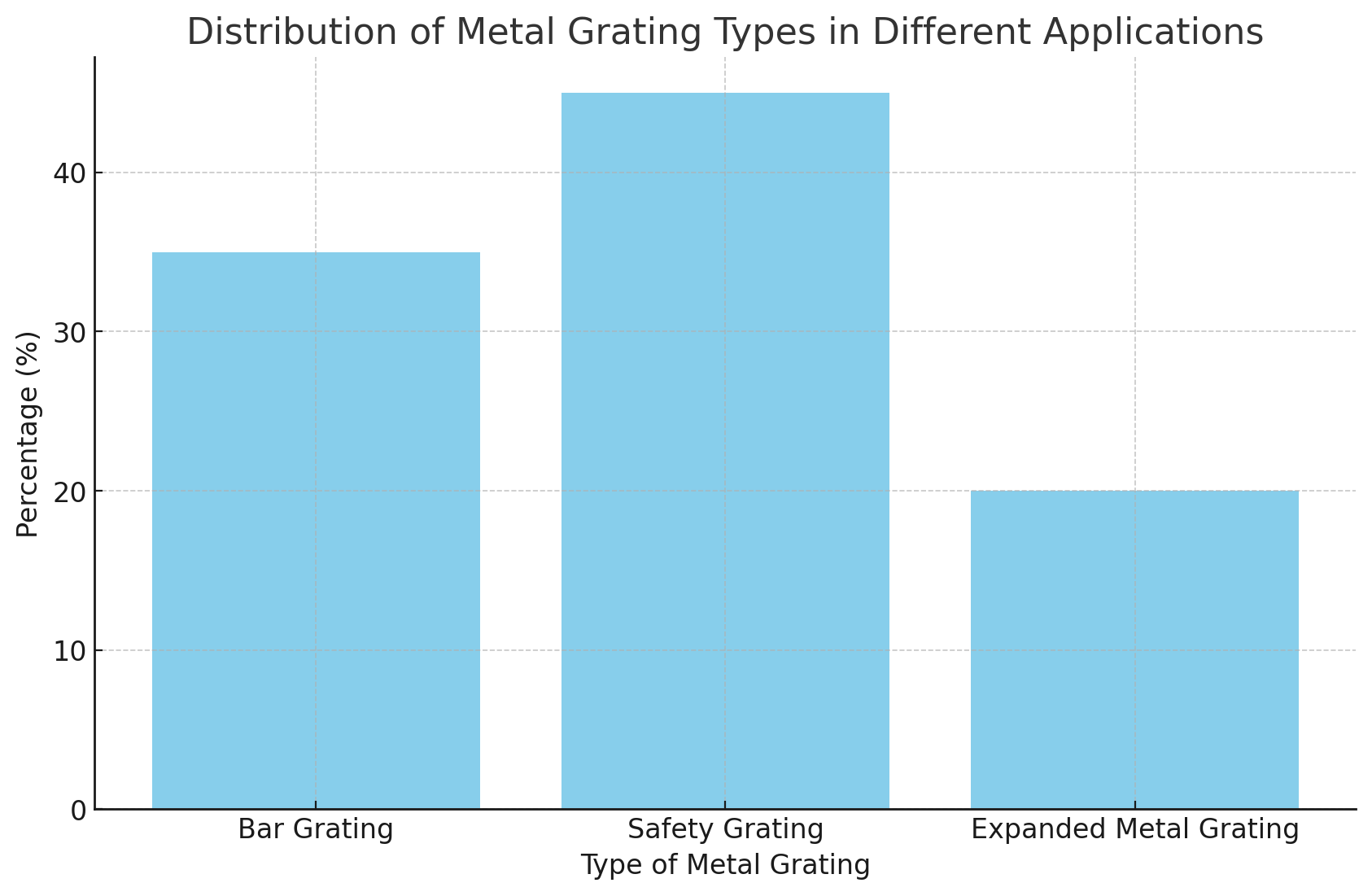
There are several types of metal grating, including bar grating, safety grating, and expanded metal grating. Each type has specific advantages and is suited for different applications, ensuring that metal grating can meet the diverse needs of industries and architecture.
Different Types of Metal Grating
Bar Grating
Bar grating is the most common and widely used type of metal grating. It consists of parallel load-bearing bars and crossbars that form a grid. This grating type is available in several manufacturing processes, including welded, press-locked, and swage-locked.
Welded Steel Grating
Welded steel grating is highly durable and suitable for heavy-duty applications. The bars are welded together using high heat and pressure, creating a robust and secure grating. It is widely used in industrial settings for walkways, platforms, and stair treads due to its ability to withstand heavy traffic and harsh environments.
Press-Locked and Swage-locked Grating
Press-locked and swage-locked grating offer strong and stable connections between bars, but their manufacturing processes differ. Press-locked grating is made by applying hydraulic pressure to lock the bars together, while swage-locked grating uses swaged connections to ensure durability. These types of grating are often used for architectural and aesthetic applications due to their clean appearance.
Safety Grating
Safety grating is designed to prevent slip accidents by providing superior traction on walking surfaces. It is often used in areas with high foot traffic, such as stair treads and walkways.
Diamond-Strut Safety Grating
This type of safety grating has a diamond-shaped pattern that increases traction and minimizes the risk of slipping. It is ideal for industrial applications where worker safety is a priority.
Traction-Grip Safety Grating
Traction-grip safety grating features a textured surface with raised buttons that provide slip resistance in all directions. It is commonly used in areas exposed to wet or slippery conditions, such as ramps, staircases, and industrial platforms.
Expanded Metal Grating
Expanded metal grating is created by cutting and stretching metal sheets to form a diamond-shaped mesh pattern. This type of grating does not require welding, offering a cost-effective solution for many industrial applications. It provides excellent ventilation and drainage while maintaining structural integrity, making it ideal for walkways, drainage systems, and safety barriers.

Applications of Metal Grating
Industrial Walkways and Platforms
Metal grating is widely used for creating durable and slip-resistant walkways and platforms in industrial environments. Its strength-to-weight ratio ensures that it can withstand heavy loads while providing a safe working surface for employees in factories, warehouses, and other manufacturing settings.
Trench Covers and Drainage Grates
Due to its open-grid design, metal grating is perfect for trench covers and drainage grates. The grating allows water and debris to pass through while providing a stable surface for vehicles and pedestrians.
Stair Treads and Safety Barriers
Metal grating is commonly used in stair treads and safety barriers in industrial and public spaces. It ensures stability and traction, reducing the risk of accidents in high-traffic areas. Additionally, it provides proper ventilation and allows for effective drainage, making it a versatile choice for safety applications.
Benefits of Metal Grating
Durability and Strength
Metal grating is known for its ability to withstand heavy loads and harsh environments. Whether used in outdoor applications or high-traffic industrial areas, it remains reliable and durable, reducing the need for frequent replacements.
Corrosion Resistance
Many types of metal grating, particularly steel grating, are coated with protective layers such as galvanization to enhance their resistance to corrosion. This makes them ideal for outdoor and harsh environments where moisture, chemicals, and abrasive substances are common.
Low Maintenance
Metal grating is easy to clean and maintain, ensuring that it remains in good condition for years. This low maintenance requirement makes it a cost-effective choice for both industrial and commercial applications.
Choosing the Right Metal Grating for Your Project
Key Factors to Consider
When choosing the right metal grating for your project, it’s essential to consider factors like material type, load-bearing capacity, environmental conditions, and safety needs. These factors will determine the appropriate grating type and manufacturing method.
Material Options
The most common materials used for metal grating include steel, aluminum, and stainless steel. Steel grating is ideal for heavy-duty applications, while aluminum grating is lightweight and corrosion-resistant, making it suitable for outdoor and marine environments. Stainless steel grating is used in corrosive environments due to its superior resistance to chemicals and moisture.
Customization Options
Custom fabrication allows for tailored grating solutions to meet unique project requirements. Customization includes adjusting bar spacing, surface finishes, and grating sizes to ensure optimal performance and fit for specific applications.
Steel Grating: A Closer Look
What is Steel Grating?
Steel grating is a robust and durable type of metal grating that is primarily used in heavy-duty industrial and commercial applications. It is made by welding, press-locking, or swage-locking bars together to form a strong, stable structure.
Advantages of Steel Grating
Steel grating is known for its exceptional load-bearing capacity and durability. It can withstand high levels of traffic, impact, and harsh environmental conditions. Additionally, steel grating is cost-effective and easy to maintain, making it a popular choice for industrial settings.
Steel Grating vs. Other Materials
Compared to other types of grating like aluminum or fiberglass, steel grating offers superior strength and load-bearing capacity. While aluminum grating is lightweight and resistant to corrosion, steel grating is more suitable for environments that require higher durability and strength.
Conclusion
In this article, we explored the various types of metal grating, including bar grating, safety grating, and expanded metal grating. Each type offers unique benefits tailored to different industrial and architectural needs. Understanding their characteristics will help in selecting the right grating for applications like platforms, drainage, or safety walkways. When choosing the best grating, consider factors like material, load-bearing capacity, and safety. For high-quality metal grating solutions, Kaiheng provides durable and customizable options to meet your specific project requirements.
FAQ
Q: What is metal grating used for?
A: Metal grating is commonly used for flooring, walkways, platforms, and drainage systems. It provides structural support, safety, and ventilation, especially in industrial settings.
Q: What are the different types of metal grating?
A: The main types of metal grating include bar grating, safety grating, and expanded metal grating. Each type is suitable for different applications based on strength, slip resistance, and ventilation needs.
Q: What is the difference between steel grating and aluminum grating?
A: Steel grating is stronger and more durable, making it ideal for heavy-duty applications. Aluminum grating is lighter and more corrosion-resistant, often used in environments with moderate weight requirements.
Q: How do I choose the right metal grating for my project?
A: Consider factors like material, load-bearing capacity, and environmental conditions. Steel grating is ideal for high-load applications, while safety grating is best for slip-resistant surfaces.
Q: Why is safety grating important in industrial settings?
A: Safety grating, such as diamond-strut and traction-grip types, provides enhanced slip resistance, reducing the risk of accidents in high-traffic and hazardous environments.