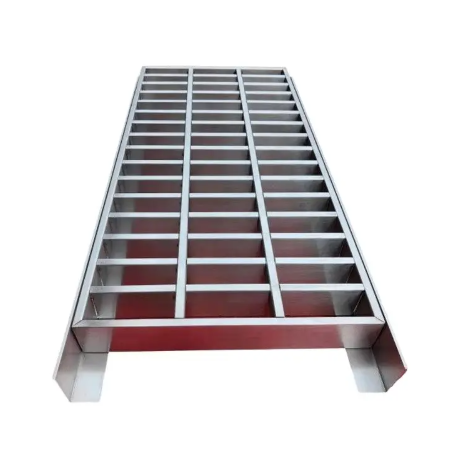
In heavy industry and municipal infrastructure, flooring is rarely just a passive surface to walk on. It serves as a critical safety component and a vital operational asset that dictates workflow efficiency. Whether you are designing a chemical refinery or a public drainage system, the specification of Steel Grating defines the facility's long-term safety profile. Failing to prioritize this structural element often results in immediate slip-and-fall liabilities, rapid corrosion in harsh environments, and excessive replacement costs that plague budgets for years.
We must move beyond basic product definitions to explore the strategic evaluation of grating solutions. This requires a deep dive into load requirements, environmental stress factors, and Total Cost of Ownership (TCO). This article equips project managers and engineers with the technical criteria needed to select the right grating specifications. You will learn how to balance safety compliance with operational longevity, ensuring your infrastructure withstands the rigors of daily use.

Key Takeaways
Safety First: Steel grating provides a dual-safety mechanism through immediate liquid drainage and high-friction (serrated) surfaces.
Material Selection: The choice between carbon steel, galvanized steel, and stainless steel dictates lifespan and maintenance cycles in corrosive environments.
Operational Efficiency: Open-grid designs improve HVAC efficiency and light penetration, lowering utility costs in large industrial facilities.
Load vs. Weight: Welded steel grating offers an optimal strength-to-weight ratio, reducing dead load on support structures without sacrificing capacity.
1. The Strategic Role of Steel Grating in Industrial Efficiency
Many procurement teams view flooring as a commodity, yet high-performance grating acts as a sophisticated operational enabler. When you install the correct grid system, you actively improve the facility's overall function. This goes beyond simple structural support; it influences air quality, visibility, and hygiene.
Beyond the Floor
We should view grating as an active participant in industrial processes. In multi-level facilities, solid flooring creates barriers that trap heat, fumes, and sound. Grating breaks these barriers. By allowing free passage between levels, it integrates vertical spaces into a cohesive operational unit. This connectivity is vital for industrial grating benefits, turning static walkways into functional assets that support the entire plant ecosystem.
Workflow & Airflow
Open-grid designs are essential for maintaining atmospheric control in power plants and manufacturing hubs. Solid floors obstruct vertical airflow, forcing HVAC systems to work harder to regulate temperatures across different elevations. Grating allows heat to rise naturally and cool air to circulate, significantly reducing the energy load on climate control systems.
Light penetration offers another tangible efficiency gain. In large warehouses or refineries, auxiliary lighting consumes massive amounts of power. Open grating allows ambient and artificial light to filter through to lower levels. This improves visibility for workers inspecting piping or machinery below, reducing the need for additional fixtures and lowering electricity utility costs.
Drainage as a Safety Function
Liquid accumulation poses one of the highest risks in industrial settings. In food processing or chemical plants, spills of water, oils, and grease are inevitable. Solid flooring allows these fluids to pool, creating hydroplaning hazards for forklifts and slip risks for pedestrians. Steel grating eliminates this issue immediately.
Liquids pass through the open mesh instantly, keeping the traction surface clear. In municipal contexts, this function is critical for preventing pooling water on sidewalks or streets during storms. By mitigating hydroplaning, you protect both vehicular traffic and pedestrians from accidents caused by standing water.
Equipment Protection
High-strength grating does more than support foot traffic; it acts as a shield for critical infrastructure. Facilities often run piping, cabling, and conveyors beneath the floor level to maximize workspace. Installing heavy-duty grating over these trenches protects sensitive equipment from falling debris and impact damage. Simultaneously, it allows maintenance crews easy visual access and quick entry without the need to remove heavy concrete covers.
2. Evaluating Steel Grating Types for Specific Project Demands
Selecting the right grating involves matching manufacturing methods and surface configurations to your specific constraints. One size rarely fits all. Understanding the nuances between construction styles ensures you do not overspend on unnecessary aesthetics or under-spec for structural loads.
Decision Matrix: Construction Methods
The manufacturing process determines the panel's durability, rigidity, and cost. We have broken down the three primary types to help you decide which steel grating in construction fits your project.
| Grating Type | Key Characteristic | Primary Application | Durability Profile |
| Welded Steel Grating | Resistance welded at every intersection. | Industrial platforms, walkways, refineries. | Extremely high. A monolithic structure that withstands heavy vibration. |
| Press-Locked Grating | Cross bars are hydraulically pressed into bearing bars. | Architectural facades, municipal projects, commercial buildings. | High lateral stiffness but slightly less rugged than welded options under heavy impact. |
| Riveted Grating | Reticulated bars riveted to bearing bars. | Bridge decking, heavy rolling stock traffic, railways. | Superior impact resistance and stress distribution; excellent for fatigue loading. |
Decision Matrix: Surface Configuration
Once you select the construction method, you must determine the surface traction. This trade-off balances hygiene against safety.
Smooth Surface: This is the standard finish for most general-purpose applications. It is easier to clean because there are no crevices for debris to trap. We recommend smooth surfaces for dry environments where cart traffic is frequent, as it provides a smoother ride for small wheels.
Serrated Surface: When moisture, oil, or ice is a factor, serrated grating is non-negotiable. Manufacturers cut notches into the bearing bars to create a teeth-like grip. This significantly increases the coefficient of friction. While slightly harder to clean, the safety gain in slippery environments outweighs the maintenance inconvenience.
3. Critical Applications: From Municipal Drainage to Industrial Platforms
The versatility of steel grating allows it to serve two very different masters: the rugged demands of heavy industry and the safety-focused regulations of public spaces. Each sector requires a distinct approach to specification.
Industrial Applications of Steel Grating
In the industrial sector, function dictates form. Engineers prioritize load capacity and chemical resistance above all else. Industrial applications of steel grating typically involve environments where failure is catastrophic.
Catwalks and Platforms
Refineries, chemical plants, and silos require extensive networks of walkways and platforms to access elevated machinery. Here, long-span capabilities are crucial. Engineers often specify high-strength carbon steel grating that can span six to eight feet between supports without significant deflection. This reduces the steel framework required underneath, saving weight and construction time. The open mesh allows hazardous fumes to escape rather than accumulate in pockets, a vital safety feature in volatile zones.
Heavy-Duty Logistics
Forklift traffic creates intense point loads that standard pedestrian grating cannot handle. For loading docks and warehouse floors, heavy-duty welded grating involves thicker bearing bars (often 1/4 inch or thicker). These panels resist the crushing force of solid rubber tires and the dynamic braking forces of heavy machinery. Using standard pedestrian grating in these zones often leads to bar deformation and structural failure.
Municipal Projects and Steel Grating
Public infrastructure presents a different challenge: human variability. Unlike a factory where workers wear safety boots, public spaces must accommodate sneakers, high heels, canes, and wheelchairs. Municipal projects and steel grating must therefore adhere strictly to accessibility standards.
Public Infrastructure
When selecting steel grating for public infrastructure, compliance with regulations like the Americans with Disabilities Act (ADA) is paramount. This typically limits the mesh opening size (often to 1/2 inch or less in the dominant direction of travel) to prevent wheelchair casters or cane tips from getting stuck. Close-mesh grating ensures that public plazas and subway ventilation grilles are safe for all pedestrians while still providing airflow.
Drainage Systems
Urban water management relies heavily on efficient steel grating in drainage systems. Trench covers in roadways must withstand the H-20 loading standard (highway traffic) while maximizing water intake to prevent flash flooding. The grating design must be robust enough to handle the impact of cars and trucks but open enough to handle high-volume runoff during storms.
Grating Solutions for Harsh Environments
Corrosion is the enemy of longevity. Standard painted steel fails quickly when exposed to salt spray, acids, or constant humidity. Implementing specific grating solutions for harsh environments is a chemical engineering decision as much as a structural one.
Hot-Dip Galvanized (HDG): This is the gold standard for outdoor municipal and industrial exposure. The zinc coating creates a metallurgical bond with the steel, providing cathodic protection. Even if the surface is scratched, the surrounding zinc sacrifices itself to protect the steel core.
Stainless Steel: For food processing plants requiring daily washdowns or chemical zones handling acids, stainless steel (Grade 304 or 316) is required. It offers the highest level of hygiene and corrosion resistance, though at a higher initial price point.
Fiberglass Reinforced Plastic (FRP): While not steel, FRP is often considered alongside steel for electrically conductive or highly corrosive environments where metal might degrade too fast.
4. Technical Specifications and Compliance Standards
A specification sheet can look like a random assortment of numbers to the untrained eye. However, deciphering these codes is essential for ensuring the product you order can physically support the intended load.
Reading the Specs
The industry uses a standardized shorthand. A common designation like 19-W-4 tells you everything about the panel's geometry:
19: This refers to the spacing of the bearing bars (the main load-carrying bars) in sixteenths of an inch. 19 means the centers are 1-3/16 inches apart (19/16).
W: This indicates the construction method, in this case, Welded.
4: This indicates the cross rod spacing in inches. Here, the cross rods are 4 inches apart on center.
You must also verify the bearing bar size (e.g., 1 x 3/16). The depth of the bar (1 inch) provides the strength, while the thickness (3/16 inch) contributes to lateral stability.
Load Tables & Deflection
Consulting load tables is mandatory. You will typically see two columns: Allowable Uniform Load (U) and Concentrated Load (C). Use Uniform Load calculations for pedestrian walkways where people are spread out. Use Concentrated Load figures for equipment placement or vehicle wheels.
Critically, you must check deflection limits. A grating panel might be strong enough not to break under a 2000 lb load, but if it sags 1 inch, workers will feel unsafe. This psychological safety factor is vital. Most standards limit deflection to 1/4 inch over the span to ensuring a solid, rigid feel underfoot.
Compliance Check
Before procurement, verify compliance with local and international standards. In the US, OSHA standards (1910.22) dictate strict requirements for walking-working surfaces to prevent trips and falls. Manufacturing tolerances regarding squareness and bowing are governed by ANSIAAMM (National Association of Architectural Metal Manufacturers) standards. Ignoring these can lead to installation nightmares where panels do not fit the structural steel frame.
5. Analyzing Total Cost of Ownership (TCO)
The purchase price of steel grating is only the tip of the iceberg. Smart project managers analyze the Total Cost of Ownership (TCO) over a 20 or 30-year horizon. Cheap materials often become the most expensive liabilities.
Initial Cost vs. Lifespan
Wood planking or expanded metal might be cheaper upfront, but they degrade rapidly. Wood rots and creates fire hazards; expanded metal often lacks the rigidity for heavy traffic, leading to dishing and tripping hazards. High-quality steel grating, particularly hot-dip galvanized variants, requires a higher initial investment. However, its lifespan often exceeds 20 to 30 years with minimal intervention. When amortized over decades, the cost per year is significantly lower than cheaper alternatives that require replacement every five to seven years.
Maintenance Realities
Solid flooring requires regular sweeping, scrubbing, and repainting to maintain safety markings. Open-grid grating is inherently self-cleaning. Debris falls through, and liquids drain away. This drastically reduces janitorial costs. The primary maintenance consideration is rust. Non-galvanized carbon steel requires regular painting, which involves labor costs and potential downtime for the facility. Choosing galvanized or stainless options eliminates this recurring expense, making them far more economical in the long run.
Sustainability Profile
Steel is the most recycled material on the planet. Utilizing steel grating contributes to circular economy goals. At the end of a facility's life, the grating can be removed and 100% recycled into new steel products. This recyclability can contribute to LEED points for construction projects, offsetting disposal costs that come with other flooring materials like concrete or treated wood.
6. Installation Considerations and Risk Mitigation
Even the highest quality grating will fail if installed incorrectly. The interface between the grating panel and the structural steel support is a common failure point.
Anchoring Systems
How you attach the grating matters. We generally see three methods:
Saddle Clips: These mechanical fasteners bridge two bearing bars and bolt to the support. They are excellent for areas requiring occasional removal for maintenance. However, they can loosen over time if the walkway is subject to heavy vibration.
Welding: Tack welding the grating to the support provides the most permanent and rigid connection. It prevents any shifting or rattling. The downside is that removing the grating to access piping below involves cutting the welds, which damages the finish.
Grating Clamps: These allow installation from above without drilling into the support steel, preserving the integrity of the structural beams.
Compatibility
Alignment is critical. A common error is cantilevering, where a grating panel extends too far past its support. This creates a tipping hazard if a worker steps on the unsupported edge. Panels must be cut to land firmly on the center of the structural beam. Additionally, the span direction of the bearing bars must run perpendicular to the supports. Installing panels sideways, where the weak cross rods bridge the gap, will lead to immediate structural collapse.
Edge Preparation
Banding involves welding a flat bar to the open ends of the grating panel. This is not just cosmetic. It provides stiffness to the panel edges and eliminates sharp, raw steel ends that can injure installers or cut cables. For heavy-duty applications, load-banding transfers the load from the cut bars to the frame, further enhancing durability.
Conclusion
Steel grating is a foundational element that balances structural integrity with environmental management. It does far more than cover a hole; it facilitates drainage, ensures airflow, and provides a secure footing for the workforce. Whether applied in a municipal drainage project or a petrochemical refinery, the material connects safety with efficiency.
For industrial and municipal projects, the cheapest option often leads to the highest risk. Success lies in specifying the correct material grade, surface type, and load capacity for the specific environment. We recommend conducting a site-specific load analysis and environmental assessment before finalizing procurement specs. By prioritizing TCO and safety over initial sticker price, you ensure your infrastructure remains safe, compliant, and operational for decades.
FAQ
Q: What is the difference between standard and heavy-duty steel grating?
A: The primary difference lies in the thickness and depth of the bearing bars. Standard grating is designed for pedestrian foot traffic and light hand carts. Heavy-duty grating features thicker bearing bars (often 1/4 inch or more) and wider spacing to support heavy static and dynamic loads, such as forklifts, trucks, and aircraft in industrial or municipal settings.
Q: When should I choose serrated over smooth steel grating?
A: You should choose serrated grating for any environment where moisture, oil, grease, or ice is present. The notched surface provides superior grip and prevents slips. Smooth grating is better suited for dry, indoor areas where easy cleaning is a priority or where small-wheeled carts (like in hospitals or server rooms) require a smoother ride.
Q: How does hot-dip galvanization extend the life of steel grating?
A: Hot-dip galvanization involves dipping the steel into molten zinc. This creates a metallurgical bond that coats the steel in a protective layer. It acts as a physical barrier against moisture and oxygen. Furthermore, zinc provides cathodic protection; if the coating is scratched, the zinc corrodes sacrificially to protect the underlying steel from rusting.
Q: Can steel grating be used for residential projects?
A: Yes, but it is less common than in industry. In residential settings, steel grating is often used for modern aesthetic elements like sunshades, deck flooring, privacy fences, or driveway trench covers. However, care must be taken to choose a mesh size that is safe for pets and children, and finishes should be selected to match the architectural style.
Q: What are the load-bearing limitations of steel grating?
A: The load limitations depend entirely on the span (distance between supports), the depth of the bearing bars, and the material used. A deep bar can span longer distances and hold more weight. You must consult the manufacturer's load tables to determine the Allowable Uniform Load and Concentrated Load to ensure the grating will not fail or deflect excessively under your specific usage conditions.