Introduction
Stair treads are a critical element of staircase safety and comfort. But have you ever wondered how wide a stair tread should be? Whether you're designing a staircase for your home, office, or industrial space, the width of the tread plays a key role in its functionality. In this article, we’ll explore the importance of stair tread width and how it impacts safety and comfort. You'll also learn how materials like steel grating can affect the overall design.
What Is a Stair Tread?
Definition and Function
A stair tread is the part of the staircase that forms the surface you step on. It provides the horizontal platform between the risers, allowing users to safely ascend or descend. The function of the tread is not just to support your weight, but also to provide the necessary stability to prevent slips or falls.
Components of a Stair Tread
A stair tread is composed of several key elements:
● Tread Surface: The flat, horizontal part you step on.
● Nosing: The overhanging part of the tread at the front edge. This extension improves the visibility of the step and helps prevent accidental trips.
● Riser: While not technically part of the tread, the riser is the vertical component that supports the tread and defines the height between each step.
Difference Between Treads and Risers
While treads provide the horizontal walking surface, risers are the vertical elements that define the height between each tread. Together, these two components form the stair structure. The tread width and riser height must be carefully balanced to create a comfortable and safe climb.
Standard Stair Tread Width
Typical Residential Stair Tread Width
In residential settings, the standard stair tread width is typically between 36 to 42 inches. This width is sufficient to ensure that most users have ample space for their feet while ascending or descending the stairs. In larger homes or multi-user settings, stairs may be designed to be wider for added comfort and safety.
Why Width Matters for Safety and Comfort
The width of the stair tread affects both safety and comfort. If the tread is too narrow, there isn’t enough space for a secure step, which could lead to discomfort or even accidents. Wider treads provide more space for foot placement, reducing the likelihood of missteps. Moreover, wider stairs can accommodate a variety of footwear, which is essential for multi-user environments.
Variations in Width for Different Settings
While residential stairs typically follow the 36–42 inch width range, commercial and industrial stairs may require wider treads to accommodate higher foot traffic. In commercial buildings, stairs often need to be wider to comply with accessibility regulations and accommodate users with disabilities. Outdoor stairs in areas with steep inclines might also require wider treads for added safety, especially in weather-prone locations.
How to Measure the Width of a Stair Tread
Tools Needed for Measuring
To measure stair tread width accurately, you’ll need the following tools:
● Tape Measure: For precise measurement from edge to edge.
● Level: To ensure the stairs are even.
● Pencil: For marking reference points.
● Paper: For recording measurements, especially if there are variations between steps.
Step-by-Step Guide for Measuring Stair Tread Width
1. Measure the width: Start by measuring the horizontal distance from one edge of the tread to the other at the widest point. This will give you the actual width.
2. Account for the nosing: If the tread has a nosing (the overhanging part), make sure to include this in your measurement, as it contributes to the overall width.
3. Check for consistency: Measure each step individually, as variations can occur in staircases, even in newly constructed ones.
Accounting for Nosing in the Measurement
Stair tread nosing is an important feature that extends beyond the riser. While measuring, it’s essential to factor in the nosing, as it adds to the total tread width. Depending on building codes, the nosing typically extends from ¾ inch to 1¼ inches, which should be included in your measurements to ensure proper fit and functionality.
Common Mistakes in Measuring Stair Tread Width
Overlooking Nosing in the Measurement
A common mistake when measuring stair treads is not accounting for the nosing. Since the nosing adds to the tread's width, neglecting this dimension can lead to incorrect measurements, affecting the fit and safety of the staircase. Always ensure you measure from the back of the riser to the front edge of the nosing for an accurate result.
Underestimating Variations Between Steps
Even in standardized staircases, slight variations in tread width can occur from step to step. It’s crucial to measure each tread individually to avoid discrepancies that may cause tripping hazards. A consistent width ensures a smooth, predictable stairway experience.
Impact of Incorrect Measurements on Safety
Incorrect measurements can have serious safety consequences. If the tread width is too narrow, it may lead to uncomfortable or unstable steps, increasing the likelihood of falls. If the tread is too wide, it could create a gap that makes users feel unsure about their footing. Consistency and accuracy in measurements are key to ensuring a safe, functional staircase.
Factors Affecting Stair Tread Width
Building Codes and Regulations
Stair tread width is regulated by building codes, which vary by location. Residential staircases typically require a minimum tread width of 36 inches, while commercial and industrial buildings may have stricter requirements to accommodate higher foot traffic. Always check local building codes to ensure compliance with safety regulations.
Environmental Considerations for Commercial and Industrial Settings
In commercial and industrial settings, stair tread width is often wider to accommodate more users and higher foot traffic. Furthermore, specific environments, such as those in factories or warehouses, may require wider treads made from durable materials like steel grating. These settings often demand materials that offer increased strength, safety, and longevity.
Aesthetic and Functional Considerations
Beyond safety, stair tread width contributes to the overall design of the staircase. Wider treads can create a more spacious, comfortable look, while narrower treads might be used in compact spaces. The material of the tread also plays a role in the design, with steel grating being an ideal choice for industrial aesthetics.

Steel Grating and Its Impact on Stair Tread Design
What is Steel Grating?
Steel grating is a material commonly used in stair tread designs, especially in industrial or commercial settings. Made from welded or press-locked steel, grating provides a durable, non-slip surface ideal for high-traffic environments. Steel grating is particularly beneficial in areas exposed to moisture, chemicals, or heavy machinery.
Advantages of Steel Grating for Stair Treads
Steel grating offers several benefits for stair tread designs:
● Durability: Steel grating is highly resistant to wear and tear, making it ideal for environments with heavy foot traffic.
● Safety: The open design of the grating provides excellent slip resistance, reducing the risk of accidents.
● Strength: Steel grating can withstand heavy loads, making it perfect for industrial applications.
How Steel Grating Affects Stair Tread Width
Steel grating’s design impacts the overall width of the tread. The spacing between the steel bars in the grating may alter how the tread is measured. It’s important to account for this unique structure when designing stairs with steel grating to ensure that they meet the necessary width and safety standards.
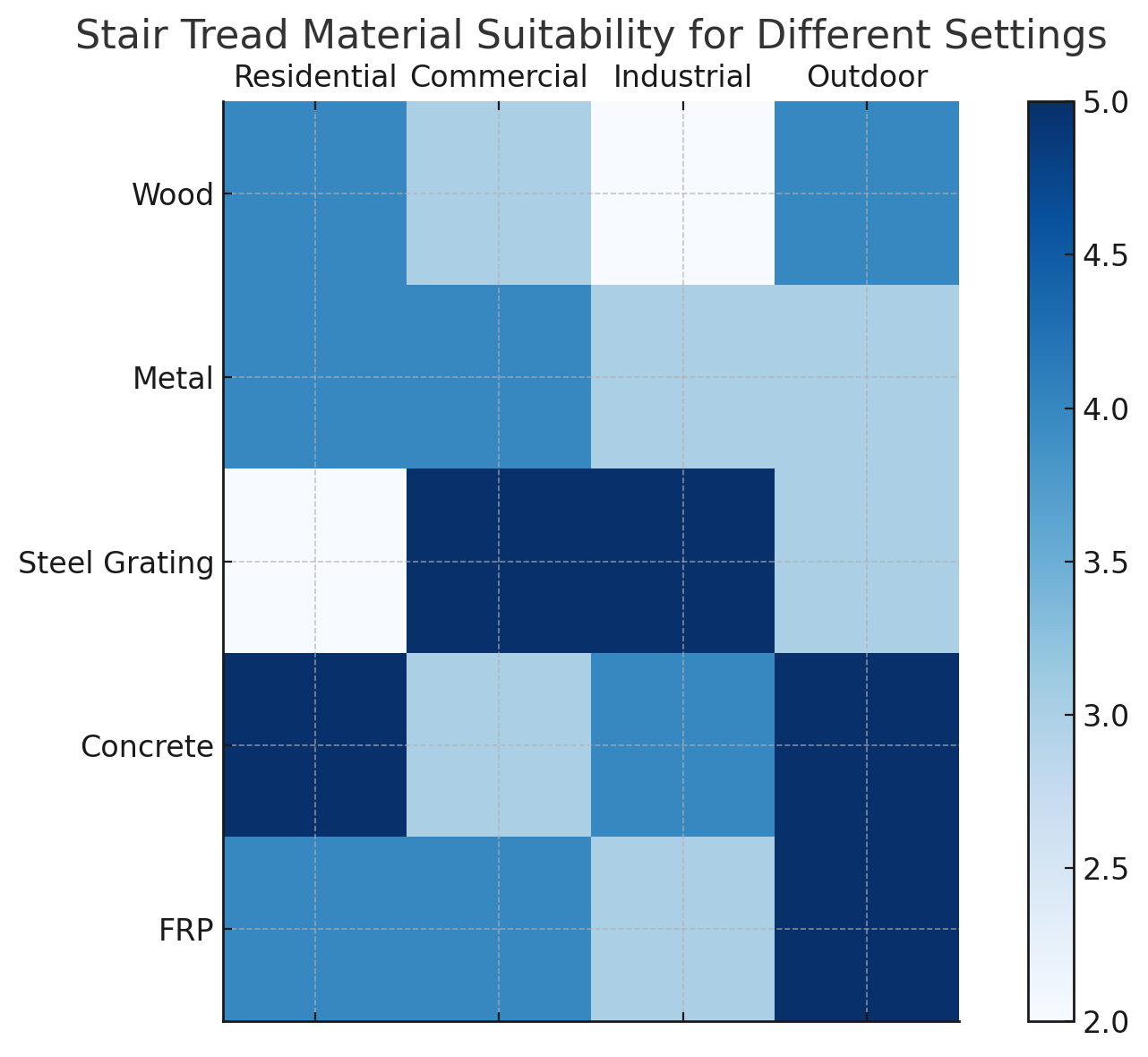
The Importance of Choosing the Right Stair Tread Material Based on Width
Wood, Metal, and Concrete Treads
Each material used for stair treads has its own benefits that can influence tread width:
● Wood: Offers a traditional look and is commonly used in residential staircases. It is often designed within standard widths for comfort and visual appeal.
● Metal: Provides durability and strength, often used in commercial or industrial environments where tread width may vary depending on the application.
● Concrete: Frequently used in outdoor or industrial staircases. Concrete treads may require extra width due to their mass and the need for additional safety features, like non-slip surfaces.
Outdoor vs. Indoor Treads
Outdoor stairs require tread widths that accommodate environmental factors such as weather and foot traffic. Outdoor stair treads are often wider and made from materials like concrete or FRP (Fiberglass Reinforced Plastic) to ensure durability in various conditions.
The Role of Safety and Slip Resistance
Choosing the right material affects the safety of the stair treads. Materials like steel grating offer superior slip resistance, making them ideal for high-traffic or wet environments. Non-slip surfaces are crucial for maintaining safety, especially in commercial or industrial settings.
Conclusion
The width of a stair tread is essential for safety, comfort, and functionality. Ensuring the right width helps prevent accidents and ensures accessibility in residential and commercial spaces. When measuring, always consider variations, account for nosing, and select materials that suit your needs. For high-quality stair treads that meet both design and safety requirements, consider Kaiheng. Their products offer durability and reliability, providing value in any environment.
FAQ
Q: What is a stair tread and why is its width important?
A: A stair tread is the horizontal part of a staircase where you step. Its width is crucial for safety, comfort, and accessibility, ensuring stable footing and preventing accidents.
Q: What is the standard width of a stair tread in residential settings?
A: The typical width of a stair tread in residential settings is between 36 to 42 inches. This range ensures sufficient space for secure footing.
Q: How does steel grating affect stair tread width?
A: Steel grating is often used in industrial environments, where its unique design impacts tread width to provide enhanced durability and slip resistance, especially in high-traffic areas.
Q: Why is measuring stair tread width correctly important?
A: Correct measurement of stair tread width, including the nosing, is vital to prevent tripping hazards and ensure the staircase is functional, safe, and visually appealing.
Q: Can stair tread width vary for different environments?
A: Yes, stair tread width can vary for different settings. Industrial environments may require wider treads, often made of materials like steel grating, to accommodate heavy foot traffic and ensure safety.
Q: What materials are best for stair treads?
A: Common materials for stair treads include wood, metal, concrete, and steel grating. The material chosen affects the tread width, durability, and safety, especially in industrial or outdoor settings.