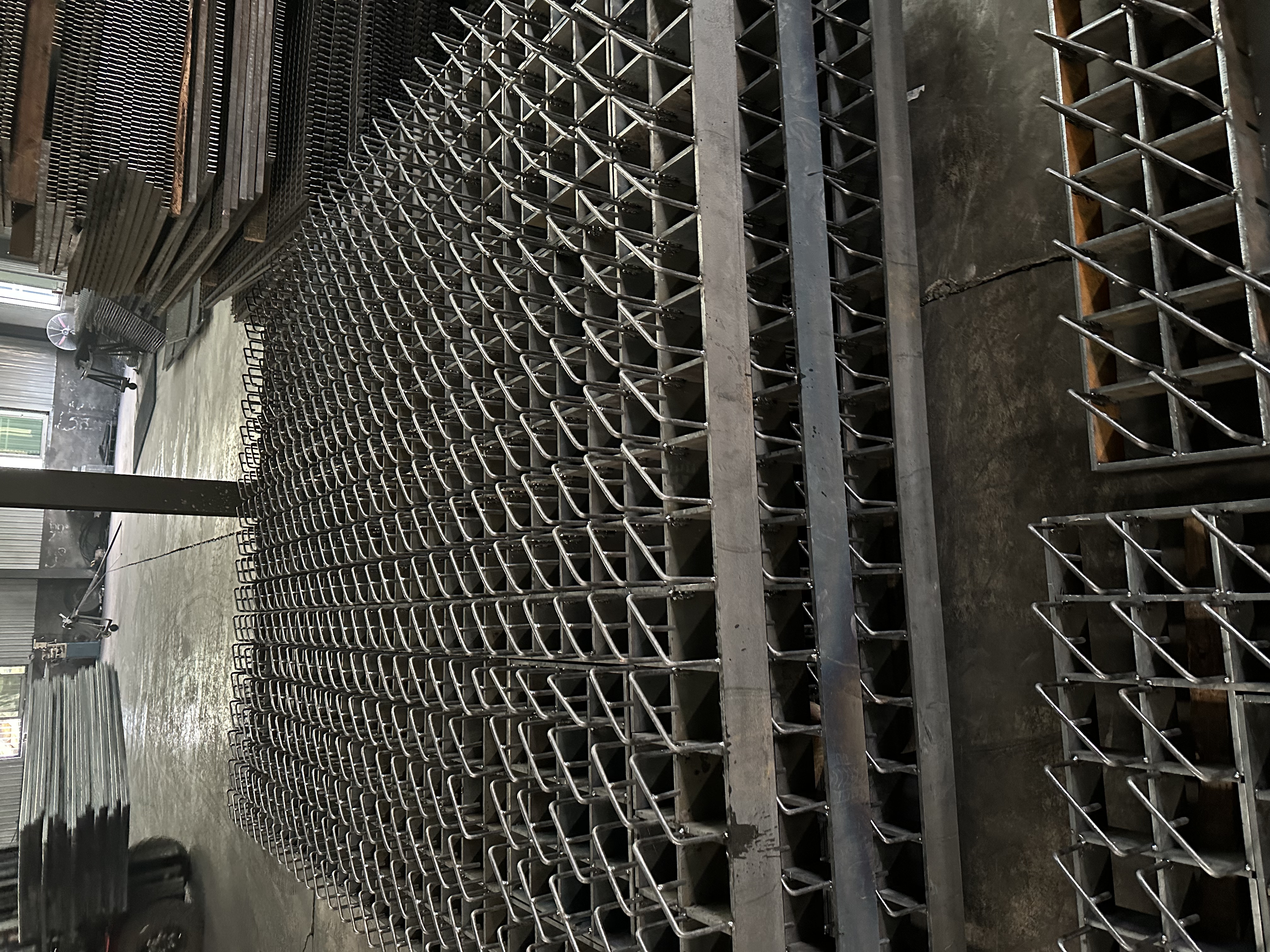
Selecting the right platform flooring is a high-stakes structural decision. Failure to choose correctly often leads to severe safety hazards, costly OSHA violations, and unexpected operational downtime. We frequently see engineers balancing complex load requirements against highly corrosive environments and tight project budgets. Striking this crucial balance requires precision and practical experience. You must avoid dangerous under-specifying while steering clear of wasteful over-engineering. It takes careful planning to match base materials, surface finishes, and physical dimensions to your actual site conditions. Our goal is to simplify this complex procurement process. We provide a clear, engineering-aligned framework to evaluate your options effectively. This comprehensive guide will help you shortlist the ideal grating for specific industrial applications. You will learn to navigate intricate load tables, assess long-term material durability, and avoid common structural traps.
Key Takeaways
Always establish maximum load requirements (uniform vs. concentrated) before looking at material options.
Match the material and surface treatment (e.g., galvanized vs. stainless, plain vs. serrated) to the specific environmental exposure (moisture, chemicals).
Rely on NAAMM (National Association of Architectural Metal Manufacturers) and OSHA standards as baseline compliance metrics, not just vendor claims.
Factor in installation realities—such as banding, cutting, and fastening methods—during the initial procurement phase to avoid costly rework.
![Industrial steel grating platform structure]()
Defining Baseline Requirements and Compliance
You must view your structural project through strict safety and regulatory lenses. OSHA mandates clear standards for workplace slip resistance, fall protection, and overhead platform clearances. Specifically, OSHA Subpart D outlines exactly how walking-working surfaces must perform to keep personnel safe. Do not rely entirely on generic vendor promises. Instead, use NAAMM/ANSI MBG 531 as your baseline industry benchmark for metal bar products. These authoritative guidelines ensure baseline structural integrity and manufacturing consistency across different suppliers.
Traffic profiles dictate your baseline engineering needs. You must clearly differentiate between usage scenarios. Pedestrian-only catwalks endure very different daily stresses than platforms supporting light cart traffic. Areas handling constant forklift movement or heavy machinery zones require specialized, highly durable solutions. In these high-stress zones, you need robust heavy duty steel grating to prevent catastrophic structural failure. Using pedestrian-grade materials in forklift zones invites immediate buckling.
You must also consider lifecycle maintenance realities. Focusing solely on cheap initial material expenses often backfires. Harsh industrial environments aggressively degrade inadequate materials within months. This rapid degradation leads to extreme lifecycle maintenance demands and frequent replacement cycles. Constant replacements force operational shutdowns. Investing in proper specifications upfront saves significant operational headaches later. Proper planning prevents recurring structural repairs.
Decoding Load Tables: Spans, Deflection, and Bearing Bars
Understanding how to decode manufacturer data is absolutely essential. You must properly interpret standard load tables to keep your platforms structurally safe.
We categorize physical forces into two primary types. First, consider the Uniform Load (U). Engineers measure this force in pounds per square foot (psf). It represents general, evenly distributed platform traffic across the entire surface area. Next, evaluate the Concentrated Load (C). This point-load weight proves critical for rolling equipment, such as heavy tool carts or localized machinery feet. You must calculate both load scenarios to ensure total platform stability.
Span and deflection limits directly impact workplace safety and pedestrian comfort. Span refers to the clear, unsupported distance between structural supports. Standard engineering practices impose strict deflection limits here. We typically recommend a maximum structural deflection of 1/4-inch under a 100 psf uniform load. Exceeding this exact limit causes noticeable surface bouncing. It makes workers feel unsafe and increases tripping hazards. You must verify your clear span dimensions before reading any manufacturer table.
Bearing bar sizing dictates the core structural integrity of your flooring. The depth and thickness of these main bars carry the actual load weight. Manufacturers use standard industry nomenclature to describe these physical dimensions. For example, the product code "19-W-4" tells you exactly how the product is built. The number "19" indicates the bearing bars are spaced 1-3/16 inches apart. The letter "W" means they are forge-welded together. Finally, the "4" shows the cross rods are spaced at 4-inch intervals. Learning this specific code prevents costly procurement errors.
Follow these steps when consulting manufacturer load tables:
Determine your exact clear span distance between rigid supports.
Identify your maximum expected uniform and concentrated loads.
Scan the table for your specific span column.
Select a bearing bar size keeping deflection strictly under the 1/4-inch limit.
Material Selection and Surface Finishes for Harsh Environments
Material composition determines how long your platform survives daily abuse. We evaluate environmental chemical exposure to select the right base metals.
Carbon steel serves as the reliable industry standard. It builds the affordable foundation for most general industrial steel grating. However, raw carbon rusts quickly in damp facilities. Hot-dip galvanizing to ASTM A123 standards is completely non-negotiable for lasting corrosion resistance. The thick zinc coating sacrifices itself to protect the underlying carbon steel from moisture.
Stainless steel provides vastly superior environmental protection. We highly recommend specifying grades 304 or 316. Evaluate stainless options for food processing facilities, aggressive chemical plants, or extreme saline offshore environments. Grade 316 contains extra molybdenum to fight off chloride attacks. The extended physical longevity often outweighs the significantly higher initial expense.
Aluminum and FRP (Fiberglass Reinforced Plastic) serve as excellent niche alternatives. We specify them when structural weight limits remain strictly capped. They also perform perfectly in specialized environments requiring non-sparking or non-magnetic properties.
Surface profiles drastically affect long-term slip resistance. You must deliberately choose between plain and serrated finishes. Plain finishes offer a smooth, standard walking surface suitable for dry indoors. Serrated finishes feature small, notched cuts along the top edges of the bearing bars. We heavily recommend serrated options for wet, oily, or outdoor applications prone to ice. Keep one major structural caveat in mind. The mechanical serration process slightly reduces the overall load-bearing capacity of the bearing bar. You essentially lose a small fraction of the bar's depth. You must carefully account for this minor load reduction in your structural engineering calculations.
Industrial Material Comparison Chart
| Material Type | Primary Advantage | Ideal Environment | Corrosion Resistance |
| Galvanized Carbon Steel | High structural strength per dollar | General manufacturing, dry to moderate moisture | Good (Sacrificial Zinc Coating) |
| Stainless Steel (304/316) | Extreme chemical durability | Food processing, chemical plants, offshore platforms | Excellent |
| Aluminum Alloys | Lightweight, non-sparking surface | Water treatment facilities, aerospace, explosive zones | Very Good |
| FRP (Fiberglass) | Non-conductive, highly lightweight | High voltage areas, severe corrosive chemical areas | Outstanding |
Matching Grating Configurations to Specific Applications
Your specific application demands a carefully selected physical configuration. Not all manufacturing methods suit every industrial environment.
Compare welded and press-locked designs carefully before ordering. Welded construction permanently fuses bearing bars and cross rods together using intense heat and pressure. This method remains ideal for standard industrial platforms. It offers exceptional strength, rigidity, and long-term durability. Press-locked designs use high hydraulic pressure to permanently lock intersecting bars into pre-cut dovetail slots. This method provides better visual aesthetics. It also delivers superior lateral support for architectural uses or close-mesh requirements where welding proves impractical.
Application-specific sizing requires diligent spatial planning. Standard elevated platforms and high-traffic mezzanines usually accept standard bar spacing. However, ground-level drainage systems demand totally different engineering specifications. When designing floor drainage, you often need proper trench cover steel grating. These rugged covers require thick edge banding to survive impact. They also need strict frame compatibility. Proper embedded framing prevents the covers from shifting dangerously under heavy dynamic vehicular loads.
Public-facing industrial zones introduce strict additional compliance rules. You must ensure ADA (Americans with Disabilities Act) compliance in these accessible areas. High-heel safe environments require extremely tight bar spacing. Usually, this means specifying a maximum 1/4-inch clear opening between the bars. The tight spacing ensures wheelchairs, walking canes, and high-heeled shoes can pass over the surface without getting dangerously stuck. Failing to meet strict ADA spacing leads to immediate safety code violations and potential public liability. Furthermore, specifying ADA materials often requires moving from standard welded construction to specialized press-locked configurations to achieve the necessary tight tolerances.
Implementation Risks and the Procurement Checklist
Poor procurement planning ruins perfectly good structural engineering. You must aggressively identify implementation risks before issuing any purchase orders.
Measurement and banding blind spots constantly cause major field issues. We strongly warn against ordering unbanded materials for high-stress walking areas. Installers often need to make circular cross-bar cutouts on-site to navigate existing pipes or support columns. These required field cutouts severely weaken the surrounding structure. You must properly edge-band these cutouts by welding a steel flat bar around the perimeter. This vital step restores the original structural integrity of the Steel Grating.
Evaluate your fastening and anchoring solutions early in the design phase. You can physically choose saddle clips, G-clips, or direct permanent welding. Each option carries specific ongoing maintenance trade-offs. Mechanical clips allow future removability. This panel access proves absolutely essential for reaching hidden equipment below the platform. However, constant machinery vibration can slowly loosen mechanical clips over time. Direct welding guarantees absolute permanent stability. It eliminates vibration noise completely. However, welding makes future maintenance access highly disruptive because maintenance teams must grind away the welds.
Use a structured procurement checklist to rigorously vet manufacturers. This ensures ultimate buyer confidence and structural safety.
Request verifiable Mill Test Reports (MTRs) to confirm raw material chemistry. Verifiable MTRs trace the exact chemical composition of the metal back to the original foundry.
Check for active NAAMM certification to verify strict manufacturing standards.
Clarify precise production lead times to prevent unexpected construction delays.
Demand written dimensional tolerance guarantees before signing supply contracts.
Verify their edge banding capabilities for custom field cutouts.
Conclusion
Choosing the correct industrial platform flooring is rarely a simple catalog purchase. The optimal choice sits at the exact intersection of maximum load capacity, aggressive environmental resistance, and strict standard compliance. You cannot safely compromise on any of these three critical pillars. Accurate initial load calculations prevent disastrous structural collapse. Proper base material selection fights off aggressive daily corrosion. Strict NAAMM and OSHA compliance constantly shields your operations from severe regulatory penalties.
We highly encourage you to take proactive next steps today. Gather your specific clear span measurements and exact maximum load data. Present this critical information directly to your structural engineering team. Ask them to officially verify the deflection limits for your exact layout. Finally, reach out to certified metal manufacturers. Request detailed technical fabrication drawings and accurate quotes based on your fully verified structural specifications.
FAQ
Q: What is the standard thickness for industrial platform grating?
A: Standard thickness typically ranges from 1 inch to 1-1/2 inches for general pedestrian catwalk spans. The exact depth you need varies heavily depending on your specific clear span length. Longer unsupported spans require much deeper bearing bars to prevent excessive surface deflection. Always consult verified manufacturer load tables to accurately match your span distance with the correct bar thickness.
Q: How do I calculate the required span for steel grating?
A: The span represents the clear, unsupported distance between two solid structural supports. To calculate it accurately, measure the open inner distance directly from support edge to support edge. Do not measure from the centerlines of the beams. Once measured, cross-reference this exact clear span dimension with the manufacturer's load tables to verify safe weight capacities.
Q: What is the difference between standard and heavy duty steel grating?
A: The primary difference lies in bearing bar thickness and the intended usage application. Standard panels typically use thinner bars suitable only for walking pedestrians. Heavy-duty options utilize significantly thicker bearing bars, usually ranging from 1/4-inch to 3/8-inch. We specify heavy-duty models to safely handle massive dynamic forces, including H-20 vehicular traffic and heavy rolling forklifts.
Q: Can standard platform grating be used as trench covers?
A: While physically possible, we rarely recommend it. Ground trenches experience concentrated, dynamic wheel loads that elevated platforms never encounter. Safe trench covers usually require dedicated heavy-duty specifications. They also demand specific structural frame seating and rigid edge banding. These crucial reinforcements handle heavy rolling impact forces and prevent the cover from dangerously dislodging.