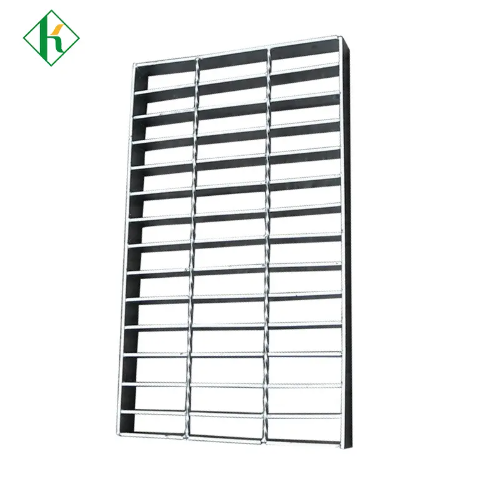
Industrial facility managers often face a recurring and expensive challenge: the premature failure of flooring infrastructure caused by relentless corrosion, chemical exposure, and heavy dynamic loads. In many sectors, standard painted or untreated steel flooring fails within just three to five years, leading to costly downtime, structural repairs, and significant safety liabilities. To combat these aggressive conditions, engineering teams require a material that provides substantial longevity without constant upkeep.
Hot Dip Galvanized Steel Grating offers a robust metallurgical answer to these issues, serving as a fit and forget solution with a lifespan that often exceeds 50 years. This guide moves beyond basic product definitions to cover technical specification criteria, ROI analysis against alternative coatings, and the critical compliance standards (ASTM/ISO) necessary for informed decision-making.

Key Takeaways
Technical Superiority: Unlike surface coatings, HDG creates a metallurgical bond (approx. 3,600 psi) that is harder than the base steel itself.
Self-Healing Mechanism: Zinc provides sacrificial cathodic protection, automatically healing scratches up to certain widths to prevent under-film corrosion.
Selection Logic: Specifying the right grating requires balancing load capacity (static vs. dynamic), span limits, and anti-slip requirements (serrated vs. plain).
TCO Advantage: While initial costs are higher than paint, the zero-maintenance lifecycle results in a significantly lower Total Cost of Ownership over 15+ years.
The Science of Durability: Why HDG Outperforms Paint
When evaluating industrial flooring, it is crucial to understand why galvanizing is not merely a coating like paint, but a metallurgical transformation. The durability of Steel Grating treated via hot-dip galvanization stems from the unique reaction between molten zinc and iron.
Metallurgical Bonding vs. Adhesion
Paint and epoxy coatings rely on mechanical adhesion to stick to the steel surface. This bond strength typically ranges from 300 to 600 psi. If moisture penetrates a pinhole in the paint, the coating can peel or blister. In contrast, hot-dip galvanizing (HDG) involves submerging the steel into a molten zinc bath at approximately 840°F (449°C). This process triggers a diffusion reaction, creating a series of zinc-iron alloy layers.
These intermetallic layers—known as Gamma, Delta, and Zeta—are physically harder than the substrate steel itself. They provide exceptional abrasion resistance, which is vital for flooring that endures heavy foot traffic or equipment movement. The result is a metallurgical bond strength of approximately 3,600 psi, making it nearly impossible for the coating to flake off under normal stress.
Edge & Corner Coverage
Liquid coatings suffer from surface tension issues. When paint is applied to a sharp corner or edge, it tends to pull back, resulting in a thinner coating at the exact point where impact is most likely to occur. This thinning out effect is a primary failure point for painted grating.
Galvanizing behaves differently. Zinc crystals grow perpendicular to the steel surface during the immersion process. This ensures that corners, edges, and internal angles receive a coating thickness that is equal to, or sometimes thicker than, the flat surfaces. For tubular or hollow bearing bars, this full immersion ensures internal welds are protected from sneaky interior corrosion that inspectors cannot see.
The "Self-Healing" Phenomenon
The most distinct advantage of zinc is its position in the galvanic series. Zinc acts as a sacrificial anode relative to steel. If the grating surface sustains a deep scratch or impact damage that exposes the base metal, the surrounding zinc sacrifices itself to protect the steel.
This cathodic protection prevents rust from undercutting the coating. Unlike paint, where a scratch allows rust to spread laterally beneath the film, the zinc barrier actively heals the breach, preventing the spread of corrosion. This mechanism is critical for maintaining structural integrity in rough industrial environments.
Critical Selection Criteria: Specifying for Load and Compliance
Selecting the correct grating involves more than just picking a material; engineers must calculate loads and ensure safety compliance. A mismatch between the grating specification and the application environment can lead to deflection or failure.
Load Calculations & Span Definitions
Facility planners must differentiate between static and dynamic loads. Pedestrian traffic typically exerts a distributed load of approximately 100 pounds per square foot (psf). However, industrial flooring often supports forklifts, pallet jacks, or vehicular traffic, which apply heavy dynamic point loads.
The unsupported span—the distance between the beams supporting the grating—dictates the required depth of the bearing bars. For example, a standard 30x100mm mesh with a 1-inch bar might suffice for a short walkway, but a longer span subjected to vehicular traffic will require heavy-duty specifications with deeper, thicker bars to prevent bowing.
Surface Treatment Options
The surface texture of the bearing bars significantly impacts safety, particularly in harsh environments where fluids are present.
Plain (Smooth): Ideally suited for general walkways, dry storage areas, and platforms where ease of cleaning is a priority. The smooth surface allows debris to be swept away easily.
Serrated: This is mandatory for areas exposed to oil, grease, moisture, or ice, such as offshore rigs and chemical plants. The serrations increase the coefficient of friction, providing necessary grip for workers.
Safety & Regulatory Compliance
Safety regulations often dictate mesh size. For areas accessible to the public or requiring wheelchair access, ADA compliance is non-negotiable. This requires specifying CloseMesh grating with spacing usually no greater than 0.5 inches to prevent wheelchair casters or high heels from getting stuck.
Furthermore, fall-through protection is a key safety consideration for elevated platforms. Planners must select a mesh size that prevents tools, nuts, bolts, or debris specific to that facility from falling through and injuring personnel working below.
Manufacturing Standards & Quality Indicators
Not all galvanized grating is created equal. The manufacturing method and adherence to international standards play a massive role in the final product's performance.
Welding Methods: Electro-Forged vs. Manual
The structural integrity of steel grating applications relies heavily on how the cross rods are attached to the bearing bars.
Machine/Electro-Forged welding utilizes high electric current and hydraulic pressure to fuse the cross rods into the bearing bars simultaneously. This results in a single-piece unit with no slag, high structural rigidity, and a clean appearance. It is the preferred method for large-scale industrial projects due to its consistency.
Manual welding is more flexible for custom shapes or small fabrication runs. However, it carries a higher risk of inconsistent welds. If the welds are not thoroughly cleaned of slag before dipping, the zinc may not bond correctly, or zinc may become entrapped in crevices, leading to future corrosion points.
Governing Standards (The Buyer’s Checklist)
To ensure quality, procurement officers should verify that suppliers adhere to recognized standards. For the zinc coating, ASTM A123 or ISO 1461 are the global benchmarks. These standards dictate the minimum coating thickness—typically 70 microns or higher, depending on the steel thickness.
For dimensional tolerances, such as the straightness of bearing bars and squareness of the panel, references to ANSI/NAAMM standards are essential. These ensure the panels will fit correctly during installation without requiring dangerous on-site modifications.
Material Grades and the Sandelin Curve
The steel chemistry affects the galvanizing outcome. Carbon steel grades like ASTM A36 are standard. However, the silicon content in the steel must be controlled. According to the Sandelin Curve, steel with certain silicon ranges can causing the zinc coating to grow excessively thick and brittle (grey coating) or too thin. Experienced manufacturers select steel with controlled silicon levels to ensure a bright, adherent finish.
ROI Analysis and Chemical Resistance Profile
While the upfront price tag of HDG grating is higher than painted steel, the value becomes clear when analyzing the full lifecycle.
Chemical Resistance Capabilities
Zinc provides a robust barrier in environments with a pH between 6 and 12. It performs exceptionally well against organic solvents and sulfides. In coastal or marine environments, where chlorides are prevalent, corrosion resistance is critical. HDG forms a stable patina of zinc carbonate that slows down the corrosion rate significantly compared to bare steel.
However, in highly acidic (pH below 6) or highly alkaline (pH above 12) environments, a Duplex System—painting or powder coating over the galvanized steel—may be required for maximum protection.
Total Cost of Ownership (TCO) Comparison
The following table illustrates why durable flooring solutions like HDG offer superior financial value over time.
Cost Factor | Painted Steel Grating | Hot-Dip Galvanized Grating |
Initial Material Cost | Low | Moderate |
Installation Cost | Standard | Standard |
Maintenance Cycle | Touch-up/Repaint every 3–5 years | Zero maintenance for 20–50+ years |
Downtime Costs | High (Shutdowns required for painting) | None |
Lifecycle (TCO) 15+ Years | Very High (Cumulative labor/material) | Lowest |
Sustainability Credits
Beyond cost, HDG contributes to green building goals. Both the steel core and the zinc coating are 100% recyclable at the end of their service life. This recyclability allows projects to earn points toward LEED certification, supporting corporate sustainability mandates.
Installation and Maintenance Best Practices
Proper handling and installation ensure the grating meets its expected lifespan without compromising the protective zinc layer.
Fixing Methods
There are two primary ways to secure grating to the structural steel:
Welding: This offers maximum security and permanence. However, the heat from welding burns off the zinc coating at the connection point. Installers must repair this area using zinc-rich paint (cold galvanizing) immediately to prevent rust.
Saddle Clips/Clamps: Mechanical fasteners allow for non-destructive installation. They are ideal for areas where the grating needs to be removed occasionally for below-floor maintenance or inspection.
Handling & Storage
A common issue during the construction phase is Wet Storage Stain or White Rust. If galvanized panels are stacked tightly together in a damp environment, moisture gets trapped between the layers without airflow. This causes rapid zinc oxidation. To prevent this, panels should be stored with spacers to allow ventilation, or kept in a dry, covered area until installation.
Maintenance Requirements
Galvanized steel benefits from a Benign Neglect approach. It requires very little intervention. If cleaning is necessary for aesthetics or hygiene, use mild detergents and low-pressure water. Avoid abrasive wire brushing or acidic cleaners, as these will erode the protective zinc patina and reduce the overall service life.
Conclusion
Choosing the right flooring infrastructure is a strategic investment in safety and operational efficiency. Hot-dip galvanized steel grating transforms a basic structural component into a long-term asset, capable of withstanding the rigors of heavy industry and aggressive climates. For harsh industrial environments, the cost of potential downtime and repeated maintenance far outweighs the initial investment in high-quality long-lasting flooring materials.
By understanding the science behind metallurgical bonding and adhering to proper ASTM/ISO standards, buyers can secure a solution that lasts for decades. We encourage procurement teams to consult with engineers regarding load charts and environmental classification before finalizing their specifications to ensure the chosen grating delivers maximum ROI.
FAQ
Q: How long does hot-dip galvanized steel grating last in marine environments?
A: In severe coastal or offshore zones with high salinity, HDG grating typically lasts 20–25 years. In less aggressive rural or industrial environments, the lifespan often extends beyond 50 years without maintenance.
Q: Can galvanized grating be welded after installation?
A: Yes, but welding galvanized steel generates toxic zinc fumes, so proper ventilation and PPE are essential. Furthermore, the heat burns off the zinc coating, requiring immediate repair with zinc-rich paint (cold galvanizing) to restore corrosion protection.
Q: What is the difference between hot-dip galvanizing and electro-galvanizing?
A: Hot-dip galvanizing involves immersing steel in molten zinc, creating a thick, chemically bonded layer suitable for outdoor durability. Electro-galvanizing applies a very thin layer using electrical current, which is primarily cosmetic and suitable only for indoor, dry applications.
Q: Does galvanized grating meet ADA requirements?
A: Not automatically. Standard industrial mesh often has large openings. To meet ADA accessibility standards, you must specifically order close mesh grating with a maximum opening of 0.5 inches to accommodate wheelchairs and prevent tripping hazards.
Q: Is serrated grating worth the extra cost?
A: Yes. For any facility prone to fluids, lubricants, grease, or ice, serrated grating significantly increases friction. The reduction in slip-and-fall liability and improved worker safety make it a necessary investment compared to plain grating.