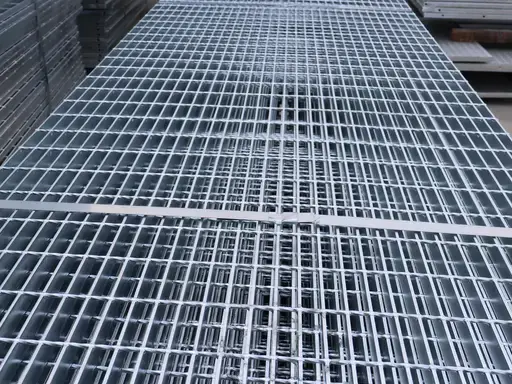
Selecting the wrong industrial flooring is an expensive mistake. Beyond the immediate financial loss of replacing materials that fail prematurely, incorrect specifications often lead to severe safety violations, drainage failures, and increased liability from slip-and-fall accidents. When facility managers and engineers evaluate Walkway Grating, they are not just buying metal or fiberglass; they are investing in long-term operational continuity.
To make an informed decision, you must consider the Safety Triangle of industrial flooring. This framework balances three critical pillars: Mechanical Traction (Slip Resistance), Environmental Resilience (Durability), and Functional Geometry (Drainage). Prioritizing one aspect while ignoring the others often results in a compromised system that cannot handle real-world process conditions.
This article evaluates various walkway materials and designs against strict industrial standards, including OSHA, ADA, and NAAMM guidelines. By understanding these technical criteria, decision-makers can accurately calculate the Total Cost of Ownership (TCO) and ensure their facility remains compliant and safe.

Key Takeaways
Material ≠ Application: Why Galvanized Steel wins on load-bearing cost, while FRP (Fiberglass Reinforced Plastic) dominates in corrosive environments.
The Coefficient of Friction: How Serrated steel and Gritted FRP surfaces drastically differ in wet vs. oily conditions.
Geometry Matters: The trade-off between drainage efficiency (open area) and ADA compliance (heel-proof spacing).
Hidden Costs: How integrated toe boards and modular clips reduce installation labor by up to 20%.
Engineering Slip Resistance: Surface Textures and Friction Coefficients
In industrial environments, non-slip must be more than a marketing buzzword. It requires a quantifiable technical specification. The most reliable metric for evaluating slip resistance in grating is the Coefficient of Friction (COF). According to OSHA recommendations and general industry best practices, a static COF greater than 0.6 is necessary for safe walking-working surfaces, though specific environments may demand higher ratings.
Defining Non-Slip Through Surface Treatments
Different contaminants interact differently with grating surfaces. A texture that works well for rainwater might fail dangerously under hydraulic oil. Understanding these nuances is key to selecting the right product.
Serrated Steel (Welded): This is the industry workhorse for greasy environments. Manufacturers cut small notches into the bearing bars to create a jagged edge. It is highly effective at cutting through heavy grease, oil, and mud, making it a staple in refineries and heavy manufacturing. However, you should note that its effectiveness can reduce over time as the serrations wear down under heavy foot traffic.
Grit-Top FRP: For environments where moisture is the primary hazard, such as marinas or water treatment plants, non-slip grating made from Fiberglass Reinforced Plastic (FRP) with an embedded grit top is superior. Silica grit fused into the surface offers exceptional traction that does not degrade easily in aquatic settings.
Meniscus (Concave) Top: This is the standard surface for molded FRP. The manufacturing process naturally forms a concave meniscus on the bar surface. While it provides adequate traction for light foot traffic, it generally offers a lower friction coefficient compared to aggressive grit surfaces.
Algrip/Diamond Plate: For extreme high-traffic zones or areas requiring a solid surface with traction, specialized coatings like Algrip or diamond plate texturing are used to ensure maximum grip.
Relevant Safety Standards
When specifying materials, you should reference specific safety codes to ensure compliance during audits.
OSHA 1910.22: This standard outlines the general requirements for walking-working surfaces, emphasizing that they must be kept clean, orderly, and in a sanitary condition, with surfaces designed to minimize slip hazards.
ASTM Specifications: various ASTM standards exist to test friction. Requesting friction test data based on these standards validates the manufacturer's claims regarding Walkway grating features.
Material Durability: Balancing Load Capacity vs. Corrosion Resistance
Durability is a function of the environment the grating inhabits. A material that lasts fifty years in a dry warehouse might dissolve in five years inside a chemical processing plant. We use a Corrosion Evaluation Framework to match the material to the chemical stressors present.
The Corrosion Evaluation Framework
Selecting corrosion-resistant walkway grating starts with identifying the primary chemical agents.
Hot-Dip Galvanized (HDG) Steel remains the industrial standard for general outdoor use. For true longevity, you must verify compliance with ASTM A123. A critical specification to check is the zinc coating thickness; it should be ≥60 µm. This thickness is essential for achieving a service life exceeding 20 years in moderate climates. It offers the best balance of strength and cost for most structural applications.
Stainless Steel (304 vs. 316) is the hygiene standard. If your facility processes food, beverages, or pharmaceuticals, stainless steel is often non-negotiable due to its ability to withstand harsh sanitization protocols. Grade 304 handles standard washdowns, while Grade 316 provides superior resistance to chlorides and acids, making it ideal for breweries and dairies. However, it commands the highest material cost.
Aluminum is chosen for its high strength-to-weight ratio. It creates a durable walkway grating solution for rooftops and suspended catwalks where reducing the dead load on the building structure is critical. It naturally forms a protective oxide layer that resists corrosion in atmospheric conditions.
FRP (Fiberglass) is the ultimate chemical solution, but it requires precise specification. The Fiberglass label is insufficient; you must specify the Resin Type:
Vinyl Ester: Highest resistance to acidic and caustic chemicals.
Polyester: Standard corrosion resistance, suitable for less aggressive environments.
Phenolic: Best for enclosed spaces like offshore platforms or tunnels where low smoke toxicity and fire resistance are paramount.
Load-Bearing Realities
Material stiffness affects how the walkway feels underfoot. Steel has a high modulus of elasticity, making it very rigid. FRP has more flex. While both can be engineered to support significant weight, FRP will deflect (bend) more than steel under the same load. For grating for heavy-duty use involving rolling loads like forklifts or pallet jacks, steel is almost always the required choice to prevent excessive deflection and fatigue failure.
Optimizing Drainage and Geometry for Process Environments
Functional geometry determines how well a walkway handles liquids, light, and air. Grating for drainage must balance the need for open area against the safety of the people walking on it.
Open Area Percentage and Flow Dynamics
The open area is the percentage of the grating surface that is void space. This is critical for ventilation, allowing smoke to dissipate during a fire event, and ensuring liquids pass through quickly to prevent pooling. Longitudinal slots are typically best for directional flow and are easier to clean, as debris can be pushed along the length of the slot. Mesh or grid patterns offer multidirectional support and catch larger falling objects, protecting workers below, but they tend to clog faster in environments with sticky debris.
Compliance Geometries
If your walkway is accessible to the public, geometry becomes a legal compliance issue.
| Standard / Requirement | Key Specification | Typical Application |
| ADA Compliance | Openings must not pass a 0.5-inch sphere (1/2 inch). | Public walkways, wheelchair accessible ramps. |
| Heel-Proof | Tight mesh spacing (often < 1/4 inch or similar). | Urban infrastructure, metro vents, office entryways. |
| High-Flow Industrial | Large open area (approx. 80%). | Stormwater channels, chemical washdown bays. |
Reference ADA Section 302.3 for the exact wording: floor and ground surfaces shall be stable, firm, and slip-resistant, with specific limits on carpet pile and grating openings. Failure to meet the 1/2-inch rule in public zones can lead to immediate inspection failures.
Manufacturing Process: Welded vs. Press-Locked vs. Pultruded
The method used to assemble the grating affects its durability and aesthetics. Understanding these processes helps in selecting industrial walkway materials that match the application intensity.
Welded Steel Grating
In this process, cross bars and bearing bars are fused together electrically at their intersection points. This creates a single, monolithic unit. Welded grating is the most durable choice for heavy-duty industrial applications where vibration and heavy static loads are common. The fusion prevents joints from loosening over time.
Press-Locked (Pressure Locked)
Here, the cross bars and bearing bars are interlocked under high hydraulic pressure without welding. This manufacturing method allows for a cleaner architectural look because the surface is perfectly flush. While excellent for aesthetics and pedestrian traffic, it offers slightly lower lateral stability compared to welded options.
Pultruded vs. Molded FRP
When choosing fiberglass, the manufacturing method dictates strength directionality.
Molded FRP: Made in a large waffle-iron-like mold. It has bi-directional strength, meaning it is equally strong in both length and width. This makes it easier to cut in the field around pipes and penetrations without losing structural integrity.
Pultruded FRP: Made by pulling resin and fibers through a die. It has unidirectional strength, making it much stiffer and suitable for longer spans, but it requires more careful engineering regarding support placement.
Implementation & ROI: Installation and Life Cycle Costs
The purchase price of the grating panels is only one component of the total cost. Installation labor and long-term maintenance significantly impact ROI. High-quality steel grating that is easy to install can be cheaper overall than budget grating that requires extensive field fabrication.
The Integrated Toe Board Advantage
OSHA requires toe boards on elevated platforms to prevent tools from falling onto workers below. Purchasing grating with pre-welded integrated toe boards can reduce installation labor by up to 20%. Field-installing toe boards involves cutting, clamping, and welding at height, which is dangerous and slow. Integrated solutions arrive ready to bolt down, ensuring immediate compliance.
Installation Clips vs. Welding
How you secure the grating matters for future maintenance.
Saddle Clips / G-Clips: These mechanical fasteners allow for non-destructive maintenance. If you need to access piping under the floor, you simply unscrew the clip. G-Clips are particularly useful as they can be installed from the top surface without drilling into the support beam.
Direct Welding: This creates a permanent fix but damages the galvanization layer. You must apply cold-galvanizing paint to the weld spots to prevent immediate rust. It also makes future removal destructive and labor-intensive.
Maintenance Scenarios
Maintenance protocols differ by material. Steel requires periodic inspection for rust bleed, especially around fasteners and field cuts. Recoating may be necessary after several years in harsh environments. FRP eliminates the rust issue entirely but carries a risk of UV degradation. To mitigate this, you must ensure UV inhibitors are specified in the resin mix or apply a UV-resistant coating, particularly in sunny climates.
Selection Matrix: Choosing the Right Grating for Your Project
To synthesize these factors, we use a decision matrix. This guide aligns common project scenarios with the optimal material and design choices.
| Scenario | Primary Constraint | Recommended Solution | Reasoning |
| Oil Rig / Offshore Platform | Corrosion > Load | Vinyl Ester FRP | Must withstand salt spray and hydrocarbons without rusting. |
| Warehouse Mezzanine | Load > Corrosion | Heavy-Duty Welded Steel | Must support forklifts and heavy rolling loads rigidly. |
| Public Park Bridge | Aesthetics + Compliance | ADA Press-Locked Steel / Aluminum | Flush surface looks better; small openings protect pedestrians. |
| Roof Walkway | Weight Savings | Serrated Aluminum | Reduces structural load on the roof while providing grip. |
Conclusion
High-quality walkway grating is not a commodity; it is a vital safety asset that protects your workforce and your infrastructure. The right choice effectively balances the initial material cost with long-term liability reduction and maintenance savings. By prioritizing the Safety Triangle—slip resistance, durability, and drainage—you ensure a facility that operates smoothly under pressure.
Before requesting a quote, we recommend conducting a Load & Chemical Audit to define your exact constraints. Review our comprehensive load tables or request a material sample kit today to physically evaluate the texture and build quality of our solutions.
FAQ
Q: What is the difference between standard grating and heavy-duty grating?
A: The primary difference lies in the dimensions of the bearing bars. Standard grating typically uses thinner and shorter bearing bars suitable for pedestrian traffic. Heavy-duty grating features significantly thicker and deeper bearing bars (often 1/4 thick or more) specifically engineered to support heavy dynamic loads, such as forklifts, trucks, and heavy machinery, without deforming.
Q: Can FRP grating support forklift traffic?
A: Generally, no. Standard molded FRP is not designed for the concentrated point loads of forklift tires. While specific high-load pultruded systems can be engineered for vehicle traffic, heavy-duty welded steel is almost always the preferred and safer choice for areas with rolling vehicle loads due to its superior stiffness and impact resistance.
Q: How do I determine if my grating needs to be ADA compliant?
A: You must adhere to ADA standards if the walkway is accessible to the general public or employees with disabilities. The critical requirement is that the grating openings must not allow a 0.5-inch (13mm) sphere to pass through. If the area is a restricted industrial zone (like a machine catwalk), standard industrial spacing is usually acceptable.
Q: Does galvanized grating require maintenance?
A: It requires minimal maintenance compared to painted steel, but it is not maintenance-free. You should inspect the zinc layer periodically for signs of wear or damage, particularly if the grating was cut or welded during installation. Any exposed steel from field modifications should be touched up immediately with high-quality cold-galvanizing compound to prevent rust spreading.